Category: parenting

  • 10 Stress-Free Ways to Get Your Kids to Eat Whole Grains at Breakfast

    10 Stress-Free Ways to Get Your Kids to Eat Whole Grains at Breakfast

    We talked recently about kids falling short of recommendations for whole grain consumption even though whole grains are so healthy. Now it’s time to look at ways to increase whole grain consumption without adding stress to your life. It’s actually not hard! 

    Whole grains are easy to find and relatively affordable. You can often use them in place of your regular refined grains, and you can usually prepare them just like you would normally prepare a refined grain. Best of all for parents is that they often taste just like refined grains. 

    Let’s start with breakfast. Here are 10 ways to add whole grains to your children’s breakfast routines without stress. Each suggestion has about 350-400 calories, 5-10 grams of fiber, 15 or more grams of protein, and a tip for making it even more family-friendly.

    Stay tuned for the next blog, in which we’ll have 10 ways to add whole grains to lunch and dinner. Good news: you may find yourself eating more whole grains, too. 

    1. Peanut Butter and “Jelly” Oatmeal

    Oatmeal is easy to make and a great go-to for a healthy breakfast. Use rolled oats or instant oats. For an easier clean-up compared to cooking oatmeal in a pan, pour boiling water in a bowl over the oats, let them sit, and then serve. 

    400 calories, 6 grams of fiber, 16 grams of protein

    What’s in it: ½ cup of dry rolled oats, ¾ cup of milk, 1 tablespoon of peanut butter, ½-¾ cup of sliced strawberries or grapes

    Pro Tip: For more of a “jelly-like” experience, cook fruit before stirring it in. Try stewed chopped pear, diced apples stewed with cinnamon, or strawberries or blueberries cooked into a sauce.

    2. Colorful Overnight Oats

    Overnight oats are even quicker than regular oatmeal. Oatmeal softens overnight for a perfectly delicious morning breakfast. Layer the ingredients in single-serving bowls, and refrigerate the oatmeal until the morning. For breakfast on-the-go for grown-ups, make your own overnight oats in a container with a leakproof lid. Grab and go in the morning on the way to school drop-off and work!

    400 calories, 8 grams of fiber, 18 grams of protein 

    What’s in it: ½ cup of dry rolled oats, ½ cup of Greek yogurt, ¼ cup of skim milk, ½ ounce of nuts like chopped walnuts, sliced almonds, or chopped peanuts, ½ cup of berries

    Pro Tip: Use colorful fruit like strawberries, blueberries, kiwi slices, and peach or mango slices for a kid-friendly look. 

    Cottage cheese or yogurt, whole-grain oats or cereal, and any type of fruit can make a beautiful and nutritious breakfast.

    3. Whole-Grain Waffles

    Take advantage of ready-made foods and your freezer to improve your children’s nutrition at breakfast. Whole-grain waffles are fun for kids, and nearly effortless for parents. For a finger food, serve the yogurt separately in a bowl, slice the waffles into strips, and let your kids dip their waffle sticks into the yogurt.

    400 calories, 7 grams of fiber, 19 grams of protein 

    What’s in it: 2 whole-grain waffles, ¾ cup of plain or low-sugar vanilla Greek yogurt, and 1 sliced banana or ¾ cup of any fruit like peach slices

    Pro Tip: Change the flavor profile by skipping the yogurt, and instead toasting 1-2 ounces of low-fat shredded cheddar cheese on the waffles. It’ll still be high in protein. 

    Waffles are easy, delicious, and potentially healthy! Add fruit and yogurt or peanut butter for a nutritious breakfast.

    4. Egg and Cheese English Muffins

    Choose whole-grain, high-fiber, or whole-grain multigrain English muffins. Another option is a whole-grain bagel or mini bagel, or even whole-wheat toast. Serve it cold or hot from the toaster oven. You can also make batches and freeze them for instant breakfasts when you need them.

    350 calories, 5 grams of fiber, 20 grams of protein 

    What’s in it: A whole-grain English muffin, 1-2 slices of low-fat American cheese, 1 cooked egg

    Pro Tip: Add a meatless breakfast sausage for extra protein and fiber. For a more fast food-like sandwich, offer your kids ketchup – but if your kids aren’t the neatest of eaters, consider saving ketchup for weekends or other days when there’s more time to clean up. 

    5. Whole-Grain Breakfast Quesadilla

    A whole-grain breakfast quesadilla is even better than a regular quesadilla because of hearty whole grains and the addition of an egg. Choose low-fat cheese for less saturated fat and more protein.

    400 calories, 5 grams of fiber, 20 grams of protein 

    What’s in it: 2 soft taco-sized tortillas, 2 ounces of shredded low-fat jack or cheddar cheese, and 1 scrambled egg. 

    Pro Tip: For healthy fats and creaminess, spread the tortilla with a layer of mashed ripe avocado before toasting it. Or, cut the quesadilla into strips or wedges, and let your kids dip them into ketchup, salsa, or guacamole. 

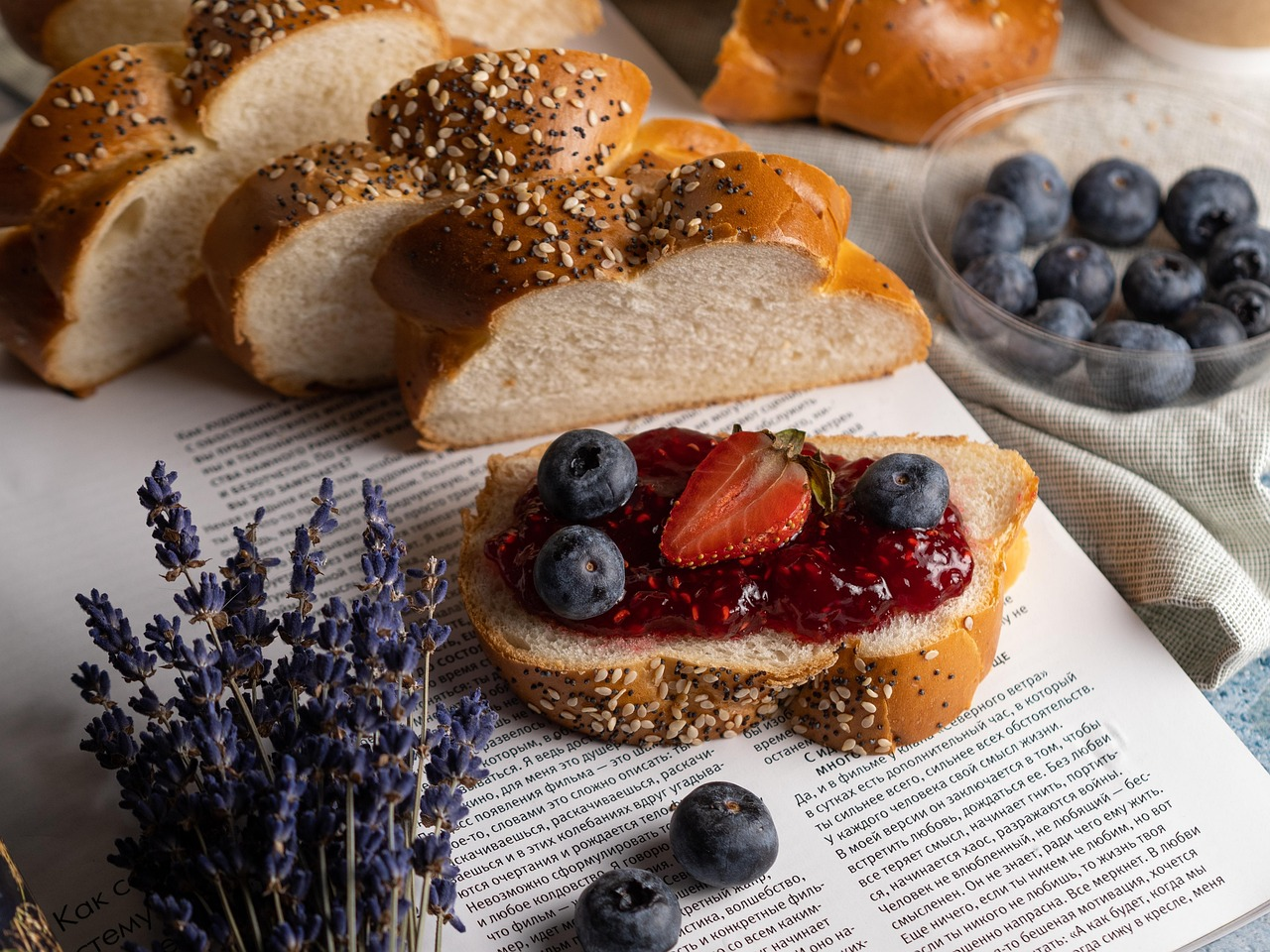
    6. Cottage Cheese with Peanut Butter Toast and Fruit

    Boring? No! Many kids love simple foods that are served separately. Plate the items nicely, or put them in small bowls for kids to feel like the components are easier to eat. Swap yogurt for cottage cheese if your kids prefer. 

    380 calories, 6 grams of fiber, 20 grams of protein 

    What’s in it: ½ cup of low-fat cottage cheese, 1 slice of whole-grain toast, 1 tablespoon of peanut butter, 1 banana or other fruit

    Pro Tip: Get your children to buy into it by letting them choose toppings like blueberries, sunflower seeds, or mini chocolate chips.

    7. Whole-Grain Bagel with Cream Cheese and Turkey

    This simple sandwich is easy and well-loved. Use low-fat cream cheese and nitrate-free turkey slices. Serve the bagel thin with grapes or other fruit. 

    400 calories, 5 grams of fiber, 14 grams of protein 

    What’s in it: 1 whole-wheat bagel, 2 tablespoons of low-fat cream cheese, 1 ounce of turkey breast, and 1 cup of grapes

    Pro Tip: Let kids who are old enough press the sandwich with a waffle iron or panini maker. For a meltier sandwich, use sliced cheese instead of cream cheese.

    8. Quinoa Breakfast Bowl 

    Quinoa may sound grown-up, but kids can enjoy it, too. Add quinoa, egg, sliced almonds, and fruit to the bowl. 

    400 calories, 7 grams of fiber, 14 grams of protein 

    What’s in it: 1 cooked egg, ½ ounce sliced almonds, ¾ cup cooked quinoa, ½ cup fresh fruit

    Pro Tip: If they’re not crazy about trying quinoa, give kids whole-wheat pasta or cooked oatmeal instead. They’ll still get whole-grain goodness, and you can enjoy a low-stress meal. Serve a plant-based version for dinner by swapping the egg for ½ cup of black beans. For another high-protein option, add 3 ounces of cooked cubed chicken breast or ground turkey.

    9. Oatmeal Pancake Breakfast

    Save this breakfast for a relaxed weekend, or make extra pancakes to refrigerate or freeze. Reheat them when you need them. Keep the pancakes plain, or add sliced banana when cooking. Your kids can also top them with fun items like mini chocolate chips or sprinkles. 

    400 calories, 6 grams of fiber, 15 grams of protein 

    What’s in it: For 4 servings of pancakes, soak ½ cup of oatmeal in ½ cup of warm milk, then mix it with 2 beaten eggs, ½ cup of whole-grain flour, 2 teaspoons of baking powder, ½ teaspoon of salt, and another ½ cup of milk. Serve pancakes with an egg or cottage cheese plus fresh fruit. 

    Pro Tip: For an on-the-go breakfast or an alternative to a breakfast platter, make sandwiches using pancakes instead of bread. Add peanut butter, cheese, or low-fat cream cheese. 

    10. Cereal, Banana, and Milk

    400 calories, grams of fiber, grams of protein 

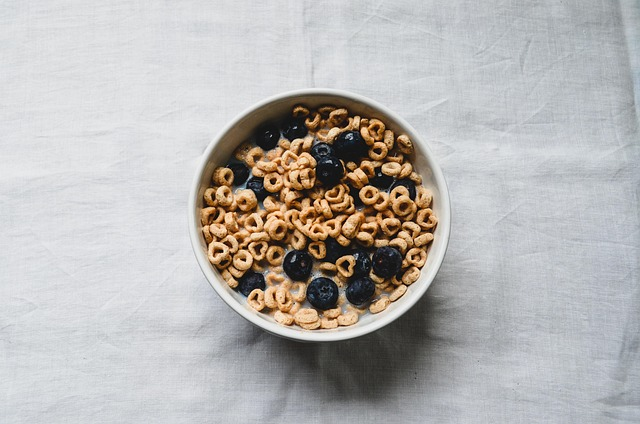
    A healthy breakfast with whole grains can be really simple. Pour cereal into a bowl. Add a sliced banana. Pour milk over it. Serve. Choose a cereal that says, “100% whole grains” on the box. Look for a version with less than 4 grams of sugar per serving. Low-sugar, high-protein whole-grain granola or cereal can be a good choice, too. Choose skim milk or unsweetened soy milk to add protein; almond milk doesn’t have much.

    What’s in it: 1 ½ ounces of whole-grain, low-sugar cereal (like 1 ½ cups of plain Oat O’s, ¾ cup of shredded wheat bites, or ¾-1 cup of bran flakes), 1 sliced banana, 1 cup of skim milk

    Pro Tip: Instead of milk, try it with ½ cup of low-fat cottage cheese or 1 cup of plain non-fat yogurt.

    How do you get your children to start the day with a whole grain? Share your tips, and stay tuned for lunch and dinner whole-grain tips!

  • Most Kids Aren’t Eating Enough Whole Grains — Here’s Why It’s Important and What You Can Do

    Ready to give your kids a good start in life? Choose more whole grains! Most kids aren’t getting enough, which means they’re losing out on a variety of nutrients and health benefits. Thankfully, it’s easy to give them more whole grains. Here’s why they’re important, and how you can get more into your home. 

    What’s a Whole Grain?

    Grains grow in kernels. A whole grain retains all three parts of the natural kernel: the bran, germ, and endosperm. The bran has fiber and B vitamins. The germ has vitamin E, healthy fats, and some minerals. The endosperm has starchy carbohydrates. 

    Swap chips for popcorn for health and weight benefits. Popcorn is a fun snack for kids, too!

    /

    While whole grains have all three parts, refined grains only retain the endosperm. The bran and germ are stripped away during processing. That means whole grains have more natural nutrients. Though most refined grains are fortified with iron and some B vitamins, whole grains have a wider variety of natural nutrients. 

    Here are examples of whole and refined grains.

    Whole Grains vs. Refined Grains
    Whole Grains Refined Grains
    • Oatmeal
    • Whole-grain cereal
    • Whole-wheat bread
    • Whole-grain crackers
    • Brown rice
    • Whole-grain pasta (whole-wheat or brown rice)
    • Quinoa, barley, bulgur
    • White bread and crackers
    • White pasta and rice
    • Refined cereal
    • Farina (cream of wheat)

    Why Whole Grains Matter for Kids

    Whole grains are a great source of fuel, or energy, for growing kids, but they are more than calories in the form of starchy carbohydrates. They’re sources of essential and beneficial nutrients, and they’re linked to short-term and long-term benefits for weight and health. 

    Essential Nutrients in Whole Grains

    Whole grains are natural sources of dietary fiber, vitamins, minerals, and healthy fats. Most Americans are low in fiber, but it’s linked to better digestive health, weight management, blood sugar control, cholesterol levels, and heart health. 

    Here are a few of the essential nutrients in whole grains. 

    • Alpha-linoleic acid, an omega-6 fatty acid
    • Vitamins: thiamin (B1), riboflavin (B2), niacin (B3), pantothenic acid, vitamin B6
    • Minerals: copper, iron, selenium, magnesium

    More Nutrients in Whole Grains

    Like fruits and vegetables, whole grains have antioxidants and other phytonutrients, or “plant nutrients,” that aren’t on the standard list of essential vitamins and minerals. Some phytonutrients in whole grains probably haven’t even been discovered yet! That’s an even better reason to opt for whole grains regularly; a refined grain or multivitamin and mineral supplement can’t provide all of the potentially beneficial components in whole grains.

    It’s easy to add whole grains when you start the day with oatmeal. Add fruit and nuts for a balanced breakfast.

    Weight Benefits of Whole Grains

    Low-carb diets may be popular, but keep reading before you keep grains away from your kids! Scientific evidence shows that people who regularly consume whole grains are more likely to have better weight control over time. 

    Researchers have found these relationships between whole grain consumption and body weight.

    • The potential for more weight loss in children who are overweight 
    • Increased weight loss in the long-term among adults who are overweight and in weight loss programs
    • Lower BMI (body mass index) in adults over time
    • Lower risk for overweight and obesity 
    • Lower risk for overweight babies among mothers with gestational diabetes who consume more whole grains during pregnancy
    Try making sandwiches with whole-grain bread, or make them half whole-grain and half white for fussier kids.

    Fiber in whole grains may be partly responsible for these benefits. Fiber is considered a filling nutrient because it slows the emptying of food from the stomach, so you feel full for longer after a meal. Plus, fiber helps reduce blood sugar fluctuations and sudden, severe hunger. 

    Whole grains can help with weight control by providing stable energy, which allows for more active play. In addition, balanced meals with whole grains can lead to more balanced energy intake.

    More Health Benefits of Whole Grains

    Decades of research point to health benefits of whole grains. People who eat more whole grains have a lower risk for:

    • Chronic inflammation
    • Colorectal cancer
    • Type 2 diabetes, prediabetes, and insulin resistance
    • Heart disease
    • Cognitive decline and memory loss during aging

    If you’re ready to arm your children to fight these and other chronic conditions, see how you can help them eat more whole grains. 

    Here’s How Far Short Kids Fall in Whole Grain Consumption

    Whole grains seem to have clear benefits, but American children fall sadly short of recommendations. The Dietary Guidelines suggest making at least half of all grain servings whole grains. For most kids, that works out to 3-5 daily 1-ounce servings of whole grains. 

    More than 1 in 3 children don’t eat whole grains on a given day. The average child consumes only 1 serving of whole grains a day. To add to the challenge, most adults don’t eat enough whole grains, either. That means kids aren’t learning this healthy habit from their parents.

    Quick and Easy Ways to Choose Whole Grains

    It’s probably easier than you think to get your kids to eat more whole grains. They’re inexpensive and widely available. They’re also easy to use; in most cases, just swap your regular refined grain for a whole grain counterpart. 

    Here are some examples. 

    • Make sandwiches on whole-wheat bread instead of white
    • Stuff whole-grain pita or tortillas instead of white pita or white flour tortillas
    • Serve whole-wheat pasta with sauce instead of white pasta
    • Steam or stir fry brown rice instead of white
    • Pop popcorn for snacks instead of serving chips

    Stay tuned for easy ways to choose whole grains, with simple tips and recipes. 

    How do you get your kids to eat whole grains?

  • How Much Halloween Candy Is Okay for Kids — and How to Handle the Leftovers Peacefully

    Halloween is a favorite night for many kids. It’s full of magic, from Halloween parties and school parades in costume to after-dark escapades around dark, decorated neighborhoods for trick-or-treating. It’s exciting to see how much of their favorite types of candy they can collect, but what happens to the buckets and mountains of candy when the evening is over? 

    A few treats are fine, especially when they come after months of anticipation and the feeling of “earning” them by trick-or-treating. What’s not okay is an excessive amount of candy for too long, leading to risk for weight gain, sugar highs and lows, tooth decay, and displacement of more nutritious foods. Here’s a take on how much Halloween candy is okay, and what you can do with the rest without experiencing World War III against the children in your household. 

    Why Set Limits on Candy Consumption?

    On the whole, candy is high in sugar, and low in nutrients. It may also be high in calories and saturated fat. Sugar consumption is linked to higher risk for obesity, type 2 diabetes, and high triglycerides and a risk for heart disease. Tooth decay is another problem linked to candy consumption. 

    It’s not just that candy has sugar and possibly unhealthy fats. In addition, when kids eat candy for snacks, they may be displacing healthier snacks like these. 

    • Fresh or dried fruit, which has fiber, antioxidants, vitamins, and minerals
    • Nuts or peanut butter, with healthy fats, fiber, and protein
    • Popcorn or rice cakes, with whole grains
    • Yogurt or string cheese, with calcium and protein

    They can even fill up on candy before meals, making them less likely to eat their vegetables and lean proteins like chicken.

    How Much Candy Is Okay for Kids?

    It’s fun to gather buckets or piles of candy on Halloween night, but it’s best to shift your mindset when it comes to actually consuming candy. Your children, and maybe even you, may have had more candy on Halloween Eve than you care to admit, but it’s time to face reality on November 1. 

    A portion of about 80 to 150 calories may be a reasonable amount of candy for a day. That’s assuming the rest of the day relies on healthy foods like vegetables, lean protein, whole grains, and fruit. 

    Here’s what 80-100 calories looks like in terms of candy.

    • A fun-size chocolate bar like Snickers, Milky Way, Kit Kat, or Twix
    • A fun-size package of Skittles or M&Ms

    Here’s what 120-150 calories looks like in terms of candy.

    • 2 Reese’s peanut butter cups
    • A fun-size 1000 Grand or Baby Ruth
    • A small bag of Starbursts
    • 5 mallow pumpkins
    Beautiful, tasty, and totally devoid of nutrients, candy is best as an occasional treat.

    The American Heart Association (AHA) suggests keeping adding sugars to no more than 25 grams a day. That’s about the amount in 3 fun-sized 3-Musketeers bars. 

    Here are some tips for healthier patterns for candy consumption.

    • Sit down and enjoy it together.
    • Encourage a mindful experience by talking about the flavors and textures of the candy.
    • Let your children choose the one they want to enjoy. 
    • If they want two different candies, let them have half of each instead of making them choose just one or letting them have all of both. 
    • Drink some water with the candy, or serve some fruit or yogurt to reduce blood sugar spikes and make it more filling. 

    Both kids and adults can benefit from storing candy out of sight and out of reach. It’s easier to avoid impulse eating.

    Whatever amount you decide on, present it to your children as fact. It’s non-negotiable. 

    What to Do with Extra Candy

    It can feel sad to give away Halloween candy. It may feel personal when your kids have “hand-gathered” it from neighbors and friends. It may also feel like you’re saying goodbye for another year to a fun holiday. But be assured that your candy can go to good purposes. 

    Donate Extra Candy

    Most schools collect leftover candy for a few days or a week after Halloween. They may pass it on to schools in needier neighborhoods, or they may partner with local food banks or charities. You can also donate it directly to food banks, charities for veterans or current active troops, community centers, nursing homes, or charities. 

    Create a Buyback Program

    Some cities host “buyback” programs in which they give money in exchange for owners to give up their illegal firearms or fireworks. Consider turning Halloween into an educational experience with an arithmetic lesson. 

    Attach a certain value to each type of candy, say, 5 cents for a hard candy or gum ball, 25 cents for a fun-sized chocolate bar, or 50 cents for a full-size bag of M&Ms. Spend time with your children taking inventory of each piece of candy and how much it’s worth. Then add up the total value, give your children that much money, and collect the candy they just “sold” to you.

    Use It Wisely at Home

    There are all kinds of fun ways to use candy at home. Keep it in a designated treat jar for special occasions or treats. Use it for crafts like decorating a gingerbread house for the holidays. Bake it into treats like cookies or brownies, or make snack mixes with ingredients like pretzels, cereal, and popcorn. 

    Caution: Keeping candy at home, no matter how good your intentions are for yourself and your children, is risky. It can lead to children begging for more candy that you’ve already said “no” to. It can also lead to you eating more candy than you’d intended. 

    Real Life: Getting Your Kids to Buy In

    For many parents, the real struggle isn’t in setting the rules (e.g., how much candy). It’s in how to enforce them and how much energy they’re willing to invest. Here are some tips for making the struggle less of a struggle.

    Acknowledge your children’s perspective. They worked hard for their candy (at least, harder than they usually do for their food, which generally shows up fully prepared on their plate at the table). Also let them know that you understand how good candy tastes, how fun Halloween is, and how special the occasion is. 

    Give your children choices. They can choose which special pieces to choose. Some parents like to let them choose when to eat the 5-10 pieces of candy that kids are allowed. It can make children feel like they’re getting away with something naughty to get to eat 3 pieces of candy before breakfast. Also let them help choose what to do with the rest, such as where to donate it to and whether they want to help deliver it. 

    Stick to the rules you decide on. Kids love rules. They like struggling against them, and they like the security that comes from knowing the rules their parents created won’t change. It’s comforting.

    How do you decide how much candy your kids can have? What do you do with the rest, and how do you handle your children’s reactions? 

  • Halloween Is the Deadliest Day of the Year for Child Pedestrians — And Here’s How You Can Protect Your Trick-or-Treaters

    Halloween is an occasion that many children and adults look forward to all year with costumes, parties, trick-or-treating, and, of course, candy. There are some serious sides to the fun, and if you are responsible for children or you interact with them on Halloween, it’s a good idea to be aware so you can protect them. Child pedestrian fatalities are higher on Halloween than any other day of the year. The news is less serious when it comes to candy, since the myth about poisoned candy is just a myth. Here are some tips on traffic risks and trick-or-treaters and making sure your children’s bounty is safe.

    Child Pedestrian Fatalities Spike on Halloween

    Combine excited children in costumes, a setting sun at dusk or a dark night, rush hour, and a high proportion of drunk drivers, and you have a recipe for disaster. That’s exactly what the data show, as two to four times as many young pedestrians are killed on Halloween than on an average day. 

    Consider this sobering information.

    • 5.5 child pedestrian fatalities occur on Halloween compared to an average of 2.6 on other days.
    • Most of these incidents occur between 5 and 9 p.m., which includes rush hour, a setting sun, a dark sky, and tired drivers coming home from work.
    • Children ages 4 to 8 are at highest risk. 
    • More than two-thirds of accidents occur in unmarked areas, not at intersections or marked crosswalks.

    These numbers are scary, but there’s a lot you can do to protect children.

    Causes of Halloween Pedestrian Fatalities

    Why are child pedestrian fatalities so high on Halloween compared to other nights? One obvious reason is that there are more children walking around. This means there are more chances for car drivers to hit and kill them.

    Other causes are related to location. Children may be crossing streets between intersections and at places that are not marked crosswalks. Drivers are less likely to be watching for pedestrians, driving slowly, or preparing to stop in these locations. 

    /

    Look before walking and double check before stepping into the street, especially when it’s dark

    There are also factors related to Halloween, like excitement and costumes. Children can be so wrapped up in their candy-hunting endeavors, or interacting with their friends, that they may forget what they’ve learned about safety. Their excitement may also make their brains incapable of hearing you remind them to be careful or to stay out of the street. 

    Though they may officially be in a group, children may run ahead of their peers or lag behind. They may get excited and dart out into the street when nobody is expecting it, leading to greater risk. 

    Both drivers and pedestrians can face visibility problems. It’s hard to see when the sun is setting or after it’s gotten dark. Halloween costumes can also visibility barriers if they are dark, making it harder for drivers to see them. Masks can prevent children from seeing well when they look for cars before stepping into the street. 

    Take Regular and Extra Safety Precautions 

    You can protect your children with some common sense, planning, and communication. Before Halloween, go over safety rules, such as holding your hand while crossing a street and looking both ways twice before stepping off of a curb. 

    When designing a costume, remember to add some bright details. Use reflective tape, a reflective vest, or glow sticks for visibility. A flashlight or bracelet light is another option. Wear some bright items yourself. When possible, choose lighter rather than darker colors – think about ghosts and pumpkins rather than cats and witches. 

    Include bright colors on costumes to be more visible

    Keep costumes safer by avoiding masks and using face paint instead if necessary so that your children can see properly. Make sure robes, pants, and skirts are no longer than ankle-length to prevent tripping.

    When thinking about where you’ll trick-or-treat, stick to safer neighborhoods. Try to stay in well-lit areas with sidewalks. Only cross at intersections or well-marked crosswalks or pedestrian lights. Remind your children to only cross with you (or another designated adult), even if other friends are crossing on their own. Stay with your children, or have a designated adult watch them.

    Visibility is poor at night, so be extra cautious

    Plan for some check-ins if you notice that your children are getting so excited that they seem unable to hear or respond to you. You might ask them to show you some of their candy before going to the next house, or you can ask them some questions about decorations that they saw. Anything to ground them and get them back to a place where they can listen well to you can help with safety. 

    If you’re staying at home to hand out candy or other treats, first of all – thank you! Until I became a parent, I never really thought about the good-hearted millions of people who “host” Halloween for the children. There’s another way you can help: pass out candy while you remind children to be safe and careful – you never know if that one reminder might make the difference. 

    Good News: Poisoned Candy Remains a Myth

    Most Americans grow up learning that we need to only eat wrapped and sealed Halloween treats because opened items could be poisoned. Thankfully, that myth is just a myth. There are no documented instances of poisoned Halloween candy. The one potential incident that occurred in the 1970s ended up being a complicated insider situation that wasn’t related to innocent trick-or-treaters.

    Still, it’s always good to check anything your children receive on Halloween or at any other time. Make sure their candy is sealed. Only accept unwrapped or homemade treats from people whom you know and trust. 

    Inspect all candy at home before they eat it. If they’re allowed to eat candy before arriving at home, have them show you what they’re going to eat before they eat it so you can make sure it looks sealed and safe. 

    Halloween should be fun, and it can be both fun and safe if you plan well for it. Make sure costumes are bright so drivers can see children, and go over safety tips with your children. Plan to stay in well-lit areas with marked crossing zones or traffic lights, and obey all laws. Take your time, and take check-in or time-out times with your children if they need to calm down. 

    How do you make sure your Halloween is safe and fun? 

  • Gratitude for the People Who Help: The Village Behind Single Parenting

    Most parents will tell you that raising children is tough. I’m no different, though I was determined not to be one of the complainers. I was also determined not to play the “single parent” card. I still try not to play it too much, but the truth is that parenting is hard, and single parenting is harder. 

    Regardless, what is also true of parenting, and likely more so of single parenting, is that there are always people stepping in to help. There are so many ways to help, and people do. Neighbors, other parents, friends, and perfect strangers have always emerged to help. I am grateful.

    Is It Okay to Accept Help?

    My parents never accepted help when they were raising me and my sister. They didn’t think it was fair to ask anyone to watch us, except for an occasional paid babysitter. Maybe it was because they were from a different generation, or maybe it is because they were more competent parents than I am.

    I have no problem asking for, and accepting, help. In return, I give help when I can. It seems natural for everyone to do what they can; it makes everyone’s lives easier.  

    Other Parents Stepping In

    I’ll pick up another parent’s child and take them to the park when it works out, or I’m happy to wait at school for a few minutes if the parent is running late or needs to run inside to talk to the child’s teacher alone. In return, I’m happy to ask for help when it seems easy for another parent to give, and when I need it. We’re all in this together. 

    The Kindness of Strangers

    Since my son was young, I’ve noticed that it would be helpful for me to have four hands, three times as much patience, and twice as much strength as I do. One time when he was about three years old, we were walking into the library. He decided he didn’t want to go anymore, and let me know that by throwing a loud tantrum. 

    While he was screaming, I took him outside and tried to calm him down. As usual, I failed miserably. After a few minutes, a librarian came out with a smile and a bookmark. She tried to distract him by showing it to him and reading it to him. She didn’t have to, but that’s the kind of kind act that I’ve received from people since my son was born. 

    Libraries serve everyone, including parents.

    People are almost always ready to help. Homeowners may smile instead of yell when my son walks on their property. Other passengers boarding a bus may hold my bags while I load my son’s bike onto the front rack. A grocery store checkout clerk smiled and calmly offered to put my groceries back on the store shelves when we had to leave before checking out due to a tantrum. A boy’s father at the park pitched my son a few baseballs for his first batting experience. These all help. 

    Neighborly Advice and a Hug

    Evenings can feel lonely. They’re the time when I’m tired and my son’s tired. We’re both at our worst of the day. He can get upset over homework, brushing teeth, and my general existence. I can get upset over homework, brushing teeth, and not having finished my work. I can’t call my parents because they’re in bed already (they’re usually in a different time zone).

    Every so often, it gets physically scary in our condo unit. He may throw a tantrum or throw things. If it seems safe, I step outside. Every so often, I bump into one of our neighbors, a single parent whose son is in college now. She understands completely, and always takes the time to give me a hug, some encouragement, and some friendly words. Since she’s been in my shoes, she must know how much it means to me. 

    Help from Old Gym Friends

    I have several friends that are on my call list. I talked about my gym friends in a recent post. Some are parents; others aren’t. They’re all willing to pick up the phone and give advice or just listen. As I mentioned before, they’re among the most kind, accepting people I know. Though I haven’t asked for several years, I know that many of them would be willing to watch my son for me or go out with us if needed. 

    Any Help Line I Can Find

    When I’m desperate and just need to talk to a friendly person, I can call a free helpline. 988, the mental health crisis line, is available 24/7 Since I’m usually crying when I call, they’re at least helpful in getting me to calm down a bit. I appreciate that they answer the phone every time, and that I’ve never had to wait more than a couple minutes on hold.

    It can help just to talk to someone

    The drawback is that they themselves don’t offer much practical advice. They seem to be more of a service to direct you to other services. In my case, most of the referrals have been irrelevant (e.g., for abused children) or impractical (e.g., a private practice located 50 miles away from our home). Still, a kind, caring voice is welcome when I’m upset and feeling alone. 

    Big Brother Big Sister Program

    One volunteer who has given my son, and therefore me, hours and hours of kindness is his Big Brother. It’s a mentorship program in which the Big takes the Little (my son) on an outing once or twice a month. They can go to parks, out to eat, to museums, to local attractions, or anything else. My son and I have lucked out with his Big – he has a kind heart, he’s interested in everything, and he makes the outings so exciting for my son. 

    /

    A kind mentor can be a role model and trusted advisor

    For me, it’s something to look forward to. Those few hours of alone time on a weekend are precious and valuable. I can relax, let my guard down, take a walk, get work done, or do whatever else I want with that time. The anticipation of that time is wonderful, too. 

    As you can see, lots of people help without asking for anything in return. There’s no guilt-tripping. It’s just pure kindness. I am grateful. 

    Who helps you out? How do you give back?

  • Why Kids Need Nutritious Meals Today to Be Healthy Tomorrow — and How Busy Parents Can Make It Happen

    Why Kids Need Nutritious Meals Today to Be Healthy Tomorrow — and How Busy Parents Can Make It Happen

    Why not just order a pizza or heat up some TV dinners if they’re quicker and sure to taste good? After all, it’s possible you still have a long to-do list for the day. It may include managing afterschool meltdowns, monitoring homework, tidying your home, packing lunches, and finishing up your own work. 

    However, healthy eating is important for the whole family. Short-term, it improves energy and focus so your kids can do better in school and you can do better at work and parenting. Medium-term, it supports growth and development. Longer-term, it helps establish healthy habits that children can carry with them for life. With such high stakes, it’s worth it to develop your arsenal of healthy meals to make when you have no time or energy. 

    /

    Make family meals happy and healthy for long-term nutritious eating.

    Common Knowledge on Nutrition, Obesity, and Health in Adults

    Most people have some idea that healthy eating is good for adults. Overweight and obesity are risk factors for chronic conditions like diabetes, certain cancers, heart disease, and age-related cognitive decline. They’re also related to mental health disorders like depression and anxiety. 

    Weight is important, but other areas of nutrition matter, too. Compared to a low-quality diet, a high-quality diet can have benefits for mind and body. Here are just a few examples of dietary components that can benefit health.

    Healthy Food Health Benefits
    Whole grains (e.g., oats, brown rice, quinoa, whole-wheat bread) Lower risk of cardiovascular disease; improved blood sugar control and lower risk of type 2 diabetes; better weight management; improved gut health (fiber).
    Fruits & vegetables (e.g., berries, leafy greens, citrus, cruciferous veg) Reduced risk of heart disease and some cancers; improved blood pressure; antioxidant support for long-term health; better diet quality and satiety.
    Legumes (e.g., beans, lentils, chickpeas) Improved glycemic control and lower diabetes risk; improved cholesterol and heart health; plant protein for weight management and satiety.
    Lean proteins (e.g., skinless poultry, tofu, low-fat dairy, eggs) Supports healthy muscle mass and weight management; helps control appetite and blood sugar; contributes to bone health (dairy).
    Fatty fish (e.g., salmon, mackerel, sardines) Omega-3 fatty acids reduce cardiovascular disease risk and inflammation; may support brain health and improve lipid profiles.
    Nuts & seeds (e.g., almonds, walnuts, flaxseed, chia) Improve heart health and cholesterol; provide healthy fats and fiber for satiety and weight management; anti-inflammatory benefits.
    Healthy oils (e.g., extra virgin olive oil, avocado) Monounsaturated fats associated with lower CVD risk; improve lipid profiles and support weight-friendly, nutrient-dense cooking.
    Low-fat dairy & calcium-rich foods (e.g., yogurt, milk, fortified plant milks) Supports bone health and blood pressure regulation; fermented dairy (yogurt) supports gut microbiome and may aid weight control.
    High-fiber foods (e.g., vegetables, whole grains, legumes, fruit skins) Improves satiety and aids weight control; lowers LDL cholesterol; helps blood sugar regulation and bowel health.
    Hydration & minimally processed beverages (water, unsweetened tea) Supports concentration and school/work performance, healthy body weight (less sugary drinks), improved kidney function and overall hydration.

    And here are examples of negative dietary factors. 

    Less Healthy Food Health Risks / Concerns
    Sugary drinks (soda, energy drinks, sweetened coffee drinks, juice cocktails) Strongly linked to weight gain, obesity, type 2 diabetes, fatty liver disease, and dental problems.
    Processed meats (hot dogs, bacon, deli meats, sausage) Increased colorectal cancer risk (WHO Group 1 carcinogen), higher risk of heart disease and hypertension due to sodium and nitrates.
    Refined grains (white bread, pastries, most crackers, many cereals) Cause rapid blood sugar spikes, contribute to weight gain, higher diabetes and cardiovascular risk vs. whole grains.
    Fast food & fried foods (fries, fried chicken, burgers, breaded snacks) High in calories, unhealthy fats, sodium — associated with obesity, hypertension, and heart disease.
    High-sugar snacks & desserts (cookies, candy, donuts, ice cream) Contribute to insulin resistance, weight gain, high triglycerides, and inflammatory markers.
    Ultra-processed packaged foods (chips, instant noodles, frozen dinners) Typically high in sodium, refined carbs, additives — associated with increased overall mortality and chronic disease risk.
    High-sodium foods (canned soups, sauces, flavored rice mixes) Elevate blood pressure and strain the heart; long-term risk for stroke and kidney disease.
    Trans fats / hydrogenated oils (older baked goods, some margarine, deep-fried shelf-stable snacks) Raise LDL (bad cholesterol), lower HDL (good cholesterol), strongly linked to heart disease.

    But does it matter for children, who seem so vibrant, healthy, and invincible? Yes!

    Long and Short-Term Effects of Childhood Obesity 

    A good reason to prevent childhood obesity is that overweight and obese children are likely to become obese adults with the health risks that obesity brings. It can be hard to see that one’s children are obese. Even if parents recognize it, they may be tempted to say that it’s just baby fat, or a growth spurt, or pre-puberty.

    Support children’s well-being by giving them opportunities to be active every day.

    However, it’s best to talk to your child’s pediatrician if you’re concerned. 

    An article in Obesity Reviews gives this information comparing obese to non-obese children. 

    • Obese children are five times more likely to become obese adults.
    • Obese adolescents have an 80% chance of remaining obese as adults.

    Regardless of obesity adulthood, children who are obese maintain a higher risk of chronic conditions like diabetes in adulthood. 

    Nutrition and School Achievement

    Besides having healthy and happy children, most parents hope for their children to enjoy school and to do well in school. Healthy diet patterns can help with these goals. A review article in Healthcare (Basel) found associations between student achievement (college grade point average) and fruit consumption as well as regular meal consumption. 

    Healthy students are more likely to be high-achieving students.

    Just as important, especially for younger children, is that healthy eating is linked to better perception of performance at school, according to research in Frontiers in Nutrition. That can be good news for parents who want their children to enjoy school and lay a foundation for a strong career at school.

    Preventing Obesity with Healthy Foods at Home

    Does your gut tell you that fast food isn’t the way to go when it comes to healthy weight for your children? Your gut is right. Take a step back before ordering pizza tonight!

    There are clear relationships between fast food consumption and obesity in children and adults. Burgers, fries, pizza, chicken nuggets, and milkshakes are calorie-dense, low in nutrients, and a good way to consume excess calories and gain weight.

    But wait, there’s more! Some evidence shows that although fast food consumption is linked to weight gain, the rest of the diet is just as important, if not more so! It turns out that people who consume more fast food also tend to have poorer diets at home. It’s good motivation not only to prepare food at home, but to plan for healthy meals at home. 

    Simple Healthy Meals for Families

    Hopefully you’re convinced that eating healthy is important for your children (and you). It can be quick to get healthy meals on the table, even when you’re tired or rushed. Keep nutritious foods on hand in the pantry, fridge, and freezer so they’re always available. 

    Here are some simple meals to consider. 

    Meal Examples
    Breakfast • Oatmeal with fruit (bananas, frozen berries, pineapple, mango) and peanut butter
    • Oat O’s or shredded wheat with milk and fruit
    • Yogurt or cottage cheese parfait with oats or granola and fruit; sprinkle with chopped peanuts or nuts
    Lunch • Peanut butter and banana in a whole-grain wrap
    • Low-fat cheese on whole-grain bread
    • Whole-wheat penne pasta with cubed cooked chicken breast
    • Veggie sides: baby carrots, grape tomatoes, sugar snap peas, cucumber slices, bell pepper strips
    • Fresh fruit: banana, berries, tangerine, apple or pear slices
    • Snacks like mini brown rice cakes
    Dinner • Whole-wheat spaghetti with marinara, mixed with cooked carrots and parmesan; chicken on the side
    • Casserole with cooked brown rice, egg or egg whites, and spinach/broccoli/green beans; side of fruit
    • Easy Taco Night: Browned lean ground turkey or beans in taco seasoning, served with whole-grain tortillas, lettuce, tomatoes, salsa, and shredded cheese — let everyone build their own

    More Ways to Support Healthy Eating Habits

    There are more ways to support healthy eating habits for your children beyond serving balanced meals. Here are a few tips. 

    • Make it easier to consume fruit and vegetables than processed snacks by having them prepared and accessible quickly when children are hungry.
    • Let children choose from among healthy choices that you offer so they can feel ownership in their choice. 
    • Have designated eating areas in your home, like the dining room table and the kitchen, so that there is less chance of developing mindless eating habits while watching television or doing other activities. 

    And remember – it may not seem like it, but your children are watching you and learning from you. What you do may be their greatest influence long-term!

    How do you support healthy eating for your children and in your household?

  • How and Why My Son Taught Me to Make Pesto

    My son recently came out of school and informed me that we had to buy basil. Thrilled that this greeting was far less hostile than some of the greetings I get at pick-up (typically ranging from nothing on a good day to a shove or a proclamation that I’m not going to let him to something-or-other on a less good day), I asked him why. He said that his class had made pesto in Garden class, and he wanted to make it at home.

    Our pesto turned out beautiful!

    I was happy about this, though his enthusiasm doesn’t always pan out. Last year, he wanted me to buy chard because they’d grown and tasted it at school. Not surprisingly, he liked it as little when I bought it for him as he had liked every time before that. And when he wanted celery, I was happy to buy him some. He hated it, just like he always had. But I understand the excitement of producing it yourself and having it under a different set of circumstances. 

    Gardening Class in Elementary School!

    My son goes to a public school, but it has a lot of elements that go far beyond your typical public school. Parent donations go a long way, including funding a garden and even a teacher for Garden. Each class goes once a week. Students might plant seeds, weed, water, or harvest. They usually also get some sort of lesson relating to how plants grow or how to use what they harvest. 

    I didn’t get to see the basil growing in my son’s school’s garden, but maybe it looked something like this.

    Getting the Pesto Ingredients

    We needed to purchase fresh basil and garlic. The timing was good, as my son was a bit sick. We needed something to do after school that didn’t require much energy, so we borrowed my parents’ car and went to a nearby supermarket for two bunches of basil and one head of garlic. 

    When we dropped off the car at my parents’ house, we took further advantage of their kindness – without asking, of course, since they were out of town. We took the rest of the ingredients we needed, including olive oil and chopped pecans, which were the closest substitute we could find to pine nuts or walnuts. We also took the remainder of a bag of Italian shredded 5-cheese blend to substitute for parmesan cheese. 

    Making the Pesto (1 Week Later)

    We delayed the actual production of pesto due to my son’s illness. Since he had barely eaten for several days by the time we assembled the ingredients, I asked if he wanted to wait to make the pesto so that he could enjoy it more when it was ready. He chose to wait.

    A few days later, when he was eating more normally, it was time to make the pesto. He got out the blender and the ingredients, assembled the blender, and plugged it in. I peeled a head of garlic and cut off the end, but he did the rest. He took the basil leaves off their stems and put them and the other ingredients in the blender, including carefully pouring in the olive oil. 

    My son said they’d used a hand cranked vegetable processor at school, so we didn’t know what setting to use on the blender. We decided to pulse it. He pulsed the blender and alternated pulsing with using a very long drink mixing spoon to stir. 

    For some reason, the head of garlic remained completely intact. He took it out of the blender and minced it with a knife on the cutting board. As a left-hander who didn’t have much knife experience, he looked kind of awkward, but he did a beautiful job. Then he put the minced garlic back in the blender and pulsed another few times.

    We don’t have a garlic press, but my son minced the garlic beautifully with a knife.

    He poured the pesto into a container, and I had the privilege of cleaning up. If anyone has any tips for washing olive oil-based foods off of dishes and utensils, please let me know! Olive oil is so greasy!

    Results: Taste and Emotions

    We both thought the pesto was delicious. Warning for those of you who are foodies: we’re not connoisseurs. We like most foods, even if they’re not traditional or perfect. But the pesto was tasty, the texture was nice, and it had been made with love and pride. We didn’t have it on pasta or any other food you might associate with pesto. Dinner included swai, sweet potato, watermelon, and zucchini. There was enough left over for a few more meals.

    It was nice to see my son proud of himself for a job well done. He told his grandparents about it, and even got to show them it while he was eating lunch while video chatting with them. 

    My son feeds off of himself. If he feels guilty or ashamed, he gets angry with himself and makes it worse. He can work himself up into a terrible state. On the other hand, when he’s proud and in control, his best self shines through. That was a beautiful gift of this pesto experience. 

    How do you let your kids be their best selves? 

    Pesto Recipes

    Traditional Pesto Recipe Our Pesto Recipe
    • 2 cups fresh basil leaves
    • ½ cup grated Parmesan cheese
    • ⅓ cup pine nuts
    • 2 cloves garlic
    • ½ cup extra-virgin olive oil
    • Pinch of salt
    • 2 bunches fresh basil leaves
    • ½ cup shredded Italian cheese blend
    • ⅓ cup chopped pecans
    • Garlic to taste (we used 1 peeled minced head of garlic — adjust as desired)
    • ½ cup olive oil
    • Pinch of salt
    Instructions
    1. Add basil, cheese, nuts, garlic, and a pinch of salt to a blender or food processor.
    2. Pulse a few times to begin breaking down the ingredients, then stream in olive oil while blending to reach your desired consistency.
    3. Stop and scrape the sides as needed; adjust seasoning to taste.
    4. Transfer pesto to a container and store in the refrigerator. Use with pasta, as a spread, or a dip.

    Approximate nutrition information per 1/6 of recipe: 180 calories, 18 grams of fat, 3 grams of saturated fat, 10 mg cholesterol, 2 grams of carbohydrates, 1 gram of fiber, 0 grams of sugar, 3 grams of protein

  • Tricks to Get Out the Door to Run in the Early Morning

    I’ve mentioned a few times that I run a lot. I’ve been running 5-6 days a week for almost 30 years. The past few years, I’ve been running about 60-70 miles per week. I posted recently about how I started running, and last week I posted questions and answers about my running. Today, keep reading to find out how I get out the door consistently to run.

    Common Challenges to Exercising Regularly

    Staying consistent with an exercise routine is often a struggle. Most people cite reasons like being too tired, not having enough time, and being unmotivated. Other barriers include not knowing what to do, not enjoying exercise, and not seeing results. Bad weather, lack of facilities, and having pain or illnesses are also likely to get in the way.

    These struggles and obstacles are real. I face many of them, too. As a single working parent, I give up a lot for my runs. I plan carefully, and use what I have in my favor: high motivation, support from a lot of people, and a long history of running daily. 

    Logistics: Getting Childcare for My Runs

    When I first decided to try for a baby, I promised myself that a child wouldn’t interfere with my running. I’ve kept that promise, thanks in part to careful planning for childcare. For more than 8 years now, reliable and wonderful people have stepped in to watch my son and let me run.

    When my parents are in town, they’re kind enough to watch my son while I run and have some “me” time in the mornings. When they’re out of town, my son and I have been lucky to have some of the world’s best babysitters. (Side note: if you don’t think your family’s babysitter(s) are the world’s best, consider looking for another one. A great babysitter makes life so much better). 

    Scheduling: Making Time to Run

    Another thing I make sure to do is set aside time to run. I prefer running early in the morning for a few reasons. First, it’s when I have energy. It’s also somewhat before I’m fully awake, so I’m too confused to take the time to consider not running. Finally, it lets me finish running before 8 or 8:30 a.m., so it’s extremely rare that anyone from work would need to contact me before I’m done running. 

    Before I leave in the morning, I need to get my son up and make sure he’s showered, dressed, and ready for breakfast. That means I need to get up early, which means I need to get to bed early. In fact, I go to bed shortly after my son does, which means I have very little work time or down time in the evening. After my son has lights-out, I eat a late-night snack (I always have liked eating at night! Currently it’s oatmeal), then go to bed. 

    More Tricks to “Make It Easier”

    I do everything I can to make running the “easy” or “default” choice. For example, I sleep in my running clothes and have my running shoes outside. My mp3 player is charged and sitting near my keys, which are by the door. There’s no organization or thought needed in the morning before I run; everything is ready by the time I go to bed the night before. 

    A List of Mental Tricks

    With all that prep, I still need to use a lot of mental tricks to get started and keep running. Having a babysitter or my parents coming at a scheduled time is a good start; I have no ability to postpone starting my run. 

    If it seems too daunting, I remind myself that I’ll be starting out so slowly that it’ll feel like I’m walking. I tell myself that if it feels too hard, I’ll slow down until it’s comfortable. I tell myself to get through one mile, then 2 miles, then a half-hour. At 5 miles, I tell myself that I can go for a while longer and be at an hour. A few miles later, and I’m done if it’s a 10-miler. 

    Throughout a run, I give myself permission to stop if I really need to. Focusing on being in this moment (“I’m okay right now”) lets me relax and keep going; there’s no need to worry about the next moment (“What if I get tired?”). 

    If I feel tired when I start or during a run, I tell myself I can take a nap later. That’s extra helpful on cold days when I feel like going back to my warm bed. 

    Instead of running a big loop, I run several laps around the block we live on. This is easier for me because I can tell myself, “I know I can do one more lap.” For other people, committing to a big loop might be easier because there’s no way to quit. 

    I try to make my runs entertaining by saving music for them. I don’t often listen to music at other times, so it makes my runs special. I might also listen to the news – another luxury that I try to save for running. 

    Since I’ve been running for so long, I know I can count on feeling better afterwards. If I go for a few weeks without feeling better afterwards, I know it’s time for an extra day off. That’s pretty rare, about 2-5 times a year. 

    It’s a Give-and-Take

    I give up a lot for running. For most people, it’s not worth it. More social time, more screen time or reading in the evenings, and the ability to sleep in may be more valuable to them than the extra miles I’m able to get in by giving up so many things. I don’t recommend it for everyone; I just recommend considering some of my strategies if you’re having trouble being consistent with your exercise routine. Consider what you can do to have more energy, make more time, and get what you need from your exercise routine, and make it happen as best you can.

    How do you get active or stay active despite challenges you may face?

  • Healthy Kid-Friendly Breakfast-for-Dinner Recipes (11–15): Quick & Easy Ideas

    Here are ideas 11-15 in the final installment of a three-part breakfast-for-dinner series. (Here is the first part and here is the second part if you missed them!). Again these recipes are designed to be fun for kids by serving elements of breakfast like waffles and eggs at dinnertime. The recipes have protein, fiber, and fruits and vegetables, and they’re easy to make and clean up. They’re also easy to modify to suit picky kids and grown-up tastes and needs. 

    11. Vegetable Omelet with Waffle and Poached Pear

    350 calories, 18 grams of protein, 5 grams of fiber

    Prep tips: Cook ripe pears in a small amount of water until very soft. Slice or dice and set aside. Saute vegetables like spinach, mushrooms, zucchini, or bell peppers. In a bowl, whisk eggs or egg whites with milk. Pour into the pan and cook. Serve with a toasted frozen whole-grain waffle topped with plain yogurt and pears. Top with cinnamon if desired. 

    Why it’s great: Frozen waffles save time, and kids love the variety of surprising tastes for dinner. 

    Nutritional highlights: Eggs and mushrooms have vitamin D, and pears have lignan, which is a special type of fiber. 

    12. Your-Way Smoothie Bowl

    350 calories, 10 grams of protein, 7 grams of fiber

    Prep tips: Let each child choose their own components. Start with cottage cheese or yogurt, then offer vegetables like carrots, spinach, or kale. Sweeten the smoothie bowl with favorite fruit like bananas, berries, or melon. For thickness, offer ripe avocado or peanut butter. Let kids top their bowls with oats, seeds, cereal, or crumbled whole-grain crackers. 

    Why it’s great: Kids love choosing their own components and sprinkling toppings at the end. Grown-ups can appreciate a break from cooking. 

    Nutritional highlights: It has calcium, healthy fats, protein, fiber, whole grains, vegetables, and fruit – all in one bowl!

    13. Whole-Grain Waffle Egg Sandwich

    420 calories, 14 grams of protein, 7 grams of fiber

    Prep tips: Cook an egg. Spread a small amount of mashed ripe avocado on two frozen and thawed whole-grain waffles. Place the egg and a slice of cheese on a waffle, and top it with the other waffle. Serve with a banana or other fruit.

    Why it’s great: Grown-ups can feel good about serving something healthy without cooking much, and kids love feeling like they’re eating “junk food” for dinner.

    Nutritional highlights: It has protein, fiber, and heart-healthy monounsaturated fats. 

    14. Breakfast Burrito

    320 calories, 15 grams of protein, 6 grams of fiber

    Prep tips:Add scrambled egg and a slice of American cheese to a whole-wheat tortilla. Adults may like it with salsa, beans, and lettuce.

    Why it’s great: It’s compact and easy to transport. Take it anywhere!

    Nutritional highlights: Small but mighty, it’s filling with protein and fiber. 

    15. Sweet Potato Egg Nests

    Prep tips: Toss grated or spiralized sweet potato or spaghetti squash with olive oil, salt, and pepper. Divide into nest-sized piles on a cookie sheet with foil and cooking spray. Bake for 10 minutes, then crack an egg into the center of each nest. Back until the eggs are set. Serve with avocado or fruit.

    Why it’s great: Includes kid favorites like eggs and sweet potatoes, and adults like using whole foods instead of processed options

    Nutritional highlights: It’s high in fiber, protein, and beta-carotene. 

    With these final five recipes, you now have 15 ways to make breakfast-for-dinner both healthy and family-approved. From finger foods to bowls, savory bites to sweet twists, you’ve got plenty of inspiration to keep mealtime exciting without sacrificing nutrition. Whether you pick a favorite or rotate through all 15, your family can enjoy balanced dinners that feel fresh, fun, and easy any night of the week.

    With these final five recipes, you now have 15 ways to make breakfast-for-dinner both healthy and family-approved. From finger foods to bowls, savory bites to sweet twists, you’ve got plenty of inspiration to keep mealtime exciting without sacrificing nutrition. Whether you pick a favorite or rotate through all 15, your family can enjoy balanced dinners that feel fresh, fun, and easy any night of the week.

  • Quick and Healthy Kid-Friendly Breakfast-for-Dinner Ideas (Recipes 6–10)

    6. English Muffin Egg Pizza

    290 calories, 17 grams of protein, 3 grams of fiber

    Prep tips: Spread marinara sauce on whole-grain English muffin halves, or use whole-wheat tortilla or sliced whole-wheat bread as a base. Distribute whisked eggs or egg whites. Add sliced tomatoes or diced vegetables and top with low-fat shredded cheese. Toast or broil until the egg is cooked. 

    English muffin pizzas can be topped with any number of great options like eggs, cheese, and spinach.

    Why it’s great: Kids love pizza in all forms, and this is a high-protein, low-fat option with minimal clean-up.

    Nutritional highlights: It’s high in protein and calcium, and adding tomatoes and tomato sauce adds lycopene and fiber. 

    7. Sweet Breakfast Pasta Bowl

    280 calories, 10 grams of protein, 5 grams of fiber

    Prep tips: Toss cooked whole-grain pasta with plain yogurt or Greek yogurt, or use cottage cheese if you prefer. Stir in sliced or mashed banana and fresh or frozen berries, and serve warm or cool. Add a sprinkle of seeds or nuts if desired. 

    Why it’s great: Kids can enjoy a sweet dinner, while grown-ups can appreciate using leftover pasta and fresh or frozen fruit. 

    Nutritional highlights: It’s a source of whole grains, calcium, antioxidants, and fiber. 

    8. Chicken Egg Cups

    250 calories, 20 grams of protein, 2 grams of fiber

    Chicken egg cups freeze nicely and make fun finger foods. Add more egg whites for extra protein, or stir in blueberries for a sweet surprise.

    Prep tips: Chop and cook vegetables like spinach, tomatoes, zucchini, corn, carrots, bell peppers, and peas. Frozen thawed vegetables and leftover vegetables also work. Toss beaten eggs with vegetables in a bowl. On a separate cutting board, dice cooked skinless chicken and place it in sprayed, lined muffin tin cups. Pour the egg mixture over it, and bake for 15-20 minutes or until the eggs are set. Serve on their own or with fruit, whole-grain crackers, or mini bagels.

    Why it’s great: Parents love that it’s high in protein for the kids, low in carbs for adults, and a delicious way for everyone to eat more vegetables. Kids love that it’s a finger food and full of colorful vegetables.

    Nutritional highlights: It has two sources of protein – chicken and egg – and is low in carbohydrates. 

    9. Apple Cheddar Quesadilla

    270 calories, 12 grams of protein, 4 grams of fiber.

    Prep tips: Slice or dice apples. Add low-fat shredded cheddar or any other cheese to whole-grain tortillas. Sneak in diced tomatoes or chopped spinach if desired. Top with another tortilla and toast. Cut into wedges to serve. 

    Fill whole-grain tortillas with cheddar cheese and add sweet apples or colorful vegetables for a wholesome dinner.

    Why it’s great: Kids love quesadillas with melty cheese. Adults can enjoy contrasts like salty, creamy melted cheese and sweet, crunchy apples.

    Nutritional highlights: Calcium for bones, protein and fiber for fullness

    10. Avocado Cottage Cheese Toast Sticks

    320 calories, 12 grams of protein, 5 grams of fiber

    Prep tips: Puree ripe avocado with cooked broccoli florets and low-fat cottage cheese to make a creamy dip. Slice whole-grain bread into strips, toast it, and serve. Alternatively, serve brown rice cakes or whole-grain crackers for dipping.

    Why it’s great: Kids can enjoy a green, creamy dip and the experience of dipping for dinner, while grown-ups can also dip vegetables for additional nutrients. 

    Nutritional highlights: The dip has healthy fats, vitamin E, and protein.

    These five new ideas add more ways to get nutritious, appealing dinners on the table fast. They can fuel growing kids and healthy adults, while bringing comfort and joy due to breakfast elements at dinner. Remember to check recipes 1-5, and watch for breakfast-for-dinner recipes 11-15 coming soon!