Tag: recipes

  • How My 8-Year-Old Decided to Be the MVP of Our Thanksgiving Team

    How My 8-Year-Old Decided to Be the MVP of Our Thanksgiving Team

    Thanksgiving is our family’s biggest holiday besides birthdays. By “big,” I mean it’s the one holiday we’re sure to celebrate. Our gathering is smaller than most people’s, usually including the four of us – me, my 8-year-old son, and my parents, who live down the street and host the meal. Compared to what I often hear from others, our Thanksgiving is less stressful. 

    We follow the spirit of Thanksgiving by putting higher priority on enjoying the holiday and each other than on serving an elaborate meal. While there are some must-haves, like turkey, stuffing, and cranberry sauce, we opt out of the endless parade of casseroles, pies, and other Thanksgiving fare many other families include. 

    For years, my son has been part of the preparations as much as possible for his age, interest, and abilities. He’s now 8. We all contribute to the meal in various ways. This year, he again took part in every part of the preparation, from helping prepare food in our home and at my parents’ house, to planning and executing table decorations, food service, and before-dessert games. Between his joy and his helpfulness, he’s the MVP of our Thanksgiving this year. 

    Thanksgiving Overview: How the Day Goes

    Thanksgiving starts out like most other day when my parents are in town. They walk to our place to pick up my son. I do my morning run and workout. My son spends the morning with my parents prepping food and planning the evening. I show up midday to help get the turkey stuffed and into the oven.

    There’s a quick clean-up, then my son and I leave for the afternoon to get outside and give my parents a break. We return for last-minute prep like decorating the pie and setting the table. Then it’s dinner time.

    Main Course: Turkey, Stuffing, and Vegetables

    My parents purchase and thaw the turkey, and buy the turkey bag for easy roasting. 

    Turkey prep starts in our home the day before Thanksgiving. I chop the vegetables for the stuffing, as well as the vegetables that go either into the turkey bag or alongside the turkey in the oven to roast. Onions and potatoes go into the turkey bag, and onions, carrots, and green beans roast on a pan next to the turkey. I also make a salad because I love salads. 

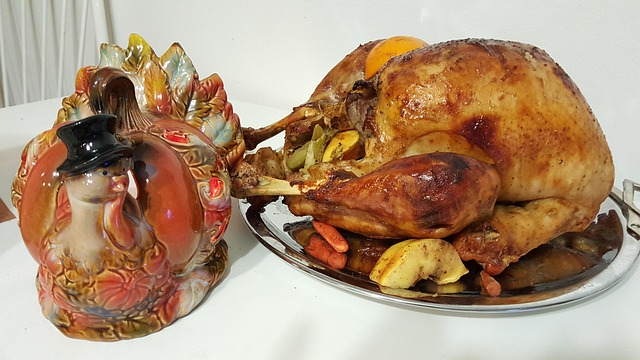
    The turkey is simple, delicious, and elegant.

    My son mixes up the stuffing. It’s always Mrs. Cubbison’s cornbread stuffing. That’s what my grandma used, and that’s what’s right, according to us! I bring the stuffing and vegetables over after my morning run and workout. 

    I get the turkey ready just after an early lunch. Then my son, my dad, and I stuff the turkey and put it in the oven bag along with onions and potatoes. We put it in the oven, and give my mom instructions on when to put the green beans and other vegetables on a pan into the oven later in the afternoon. 

    Pie Prep

    Thankfully, from the point of view of health and stress, we’re not big on Thanksgiving desserts. I don’t ever remember having a pumpkin pie, or any of the other typical fare like pecan pie or cheesecake that others may have. My mom has been known to make an apple cake or something else if she’s inspired, but we don’t have any “required” desserts. 

    My son and I have started making Cool Whip pies because they’re fun and easy. They’re guaranteed to taste good, and there’s no harm done if we decide not to eat the whole thing. Plus, they inspire creativity. 

    This year, we prepped a pie with white Cool Whip on the sides, and a purple Cool Whip “river” colored with blueberry yogurt and blueberries. The “river” included Goldfish, and the banks included green Hershey-ette “trees” “planted” in chocolate syrup “soil.” Pretzel rods formed a “bridge.” We made the pie base in our home the day before, froze it overnight, and finished decorating it on Thanksgiving at my parents’ home. 

    Thanksgiving Morning at the House: My Dad and My Son

    My dad and my son are like two lost brothers. They’re really quite a team. The morning of Thanksgiving, they make cranberry sauce from scratch, bake bread from scratch, and get out the fancy china and silverware that belonged to my grandmother. They get out the extra table for serving the food.

    We always have turkey, stuffing, cranberry sauce, and vegetables.

    The table decorations are always a surprise for me. This year, they turned out to be seat markers on the back of each seat. They had our names and our numbers, which are the numbers my son has assigned to us as members of his imaginary baseball team. The centerpiece was a pumpkin decorated with a face drawn with gold and silver metallic pens.

    They also put the final touches on the plans for entertainment after dinner and before dessert. Previous years have included puppet shows, Lego demonstrations, and story telling. This year was a series of board games in a sort of tournament style. It’s always very well orchestrated, as my son pays remarkable attention to detail, and my dad has a remarkable capacity to pay attention and remember his role. 

    Fresh bread is always a treat.

    Post-Dinner: Clean-Up and Relax

    After dinner, my mom and I clean up. She clears the table, and I wash the dishes. Both of us enjoy it; we find it relaxing. During clean-up time, my dad plays with my son. He enjoys that; he finds it relaxing. 

    We’re all satisfied and pleased with the meal, and my son is proud of himself for a job well done. We’re grateful to have him make the holidays more special and meaningful.
  • Why Kids Need Nutritious Meals Today to Be Healthy Tomorrow — and How Busy Parents Can Make It Happen

    Why Kids Need Nutritious Meals Today to Be Healthy Tomorrow — and How Busy Parents Can Make It Happen

    Why not just order a pizza or heat up some TV dinners if they’re quicker and sure to taste good? After all, it’s possible you still have a long to-do list for the day. It may include managing afterschool meltdowns, monitoring homework, tidying your home, packing lunches, and finishing up your own work. 

    However, healthy eating is important for the whole family. Short-term, it improves energy and focus so your kids can do better in school and you can do better at work and parenting. Medium-term, it supports growth and development. Longer-term, it helps establish healthy habits that children can carry with them for life. With such high stakes, it’s worth it to develop your arsenal of healthy meals to make when you have no time or energy. 

    /

    Make family meals happy and healthy for long-term nutritious eating.

    Common Knowledge on Nutrition, Obesity, and Health in Adults

    Most people have some idea that healthy eating is good for adults. Overweight and obesity are risk factors for chronic conditions like diabetes, certain cancers, heart disease, and age-related cognitive decline. They’re also related to mental health disorders like depression and anxiety. 

    Weight is important, but other areas of nutrition matter, too. Compared to a low-quality diet, a high-quality diet can have benefits for mind and body. Here are just a few examples of dietary components that can benefit health.

    Healthy Food Health Benefits
    Whole grains (e.g., oats, brown rice, quinoa, whole-wheat bread) Lower risk of cardiovascular disease; improved blood sugar control and lower risk of type 2 diabetes; better weight management; improved gut health (fiber).
    Fruits & vegetables (e.g., berries, leafy greens, citrus, cruciferous veg) Reduced risk of heart disease and some cancers; improved blood pressure; antioxidant support for long-term health; better diet quality and satiety.
    Legumes (e.g., beans, lentils, chickpeas) Improved glycemic control and lower diabetes risk; improved cholesterol and heart health; plant protein for weight management and satiety.
    Lean proteins (e.g., skinless poultry, tofu, low-fat dairy, eggs) Supports healthy muscle mass and weight management; helps control appetite and blood sugar; contributes to bone health (dairy).
    Fatty fish (e.g., salmon, mackerel, sardines) Omega-3 fatty acids reduce cardiovascular disease risk and inflammation; may support brain health and improve lipid profiles.
    Nuts & seeds (e.g., almonds, walnuts, flaxseed, chia) Improve heart health and cholesterol; provide healthy fats and fiber for satiety and weight management; anti-inflammatory benefits.
    Healthy oils (e.g., extra virgin olive oil, avocado) Monounsaturated fats associated with lower CVD risk; improve lipid profiles and support weight-friendly, nutrient-dense cooking.
    Low-fat dairy & calcium-rich foods (e.g., yogurt, milk, fortified plant milks) Supports bone health and blood pressure regulation; fermented dairy (yogurt) supports gut microbiome and may aid weight control.
    High-fiber foods (e.g., vegetables, whole grains, legumes, fruit skins) Improves satiety and aids weight control; lowers LDL cholesterol; helps blood sugar regulation and bowel health.
    Hydration & minimally processed beverages (water, unsweetened tea) Supports concentration and school/work performance, healthy body weight (less sugary drinks), improved kidney function and overall hydration.

    And here are examples of negative dietary factors. 

    Less Healthy Food Health Risks / Concerns
    Sugary drinks (soda, energy drinks, sweetened coffee drinks, juice cocktails) Strongly linked to weight gain, obesity, type 2 diabetes, fatty liver disease, and dental problems.
    Processed meats (hot dogs, bacon, deli meats, sausage) Increased colorectal cancer risk (WHO Group 1 carcinogen), higher risk of heart disease and hypertension due to sodium and nitrates.
    Refined grains (white bread, pastries, most crackers, many cereals) Cause rapid blood sugar spikes, contribute to weight gain, higher diabetes and cardiovascular risk vs. whole grains.
    Fast food & fried foods (fries, fried chicken, burgers, breaded snacks) High in calories, unhealthy fats, sodium — associated with obesity, hypertension, and heart disease.
    High-sugar snacks & desserts (cookies, candy, donuts, ice cream) Contribute to insulin resistance, weight gain, high triglycerides, and inflammatory markers.
    Ultra-processed packaged foods (chips, instant noodles, frozen dinners) Typically high in sodium, refined carbs, additives — associated with increased overall mortality and chronic disease risk.
    High-sodium foods (canned soups, sauces, flavored rice mixes) Elevate blood pressure and strain the heart; long-term risk for stroke and kidney disease.
    Trans fats / hydrogenated oils (older baked goods, some margarine, deep-fried shelf-stable snacks) Raise LDL (bad cholesterol), lower HDL (good cholesterol), strongly linked to heart disease.

    But does it matter for children, who seem so vibrant, healthy, and invincible? Yes!

    Long and Short-Term Effects of Childhood Obesity 

    A good reason to prevent childhood obesity is that overweight and obese children are likely to become obese adults with the health risks that obesity brings. It can be hard to see that one’s children are obese. Even if parents recognize it, they may be tempted to say that it’s just baby fat, or a growth spurt, or pre-puberty.

    Support children’s well-being by giving them opportunities to be active every day.

    However, it’s best to talk to your child’s pediatrician if you’re concerned. 

    An article in Obesity Reviews gives this information comparing obese to non-obese children. 

    • Obese children are five times more likely to become obese adults.
    • Obese adolescents have an 80% chance of remaining obese as adults.

    Regardless of obesity adulthood, children who are obese maintain a higher risk of chronic conditions like diabetes in adulthood. 

    Nutrition and School Achievement

    Besides having healthy and happy children, most parents hope for their children to enjoy school and to do well in school. Healthy diet patterns can help with these goals. A review article in Healthcare (Basel) found associations between student achievement (college grade point average) and fruit consumption as well as regular meal consumption. 

    Healthy students are more likely to be high-achieving students.

    Just as important, especially for younger children, is that healthy eating is linked to better perception of performance at school, according to research in Frontiers in Nutrition. That can be good news for parents who want their children to enjoy school and lay a foundation for a strong career at school.

    Preventing Obesity with Healthy Foods at Home

    Does your gut tell you that fast food isn’t the way to go when it comes to healthy weight for your children? Your gut is right. Take a step back before ordering pizza tonight!

    There are clear relationships between fast food consumption and obesity in children and adults. Burgers, fries, pizza, chicken nuggets, and milkshakes are calorie-dense, low in nutrients, and a good way to consume excess calories and gain weight.

    But wait, there’s more! Some evidence shows that although fast food consumption is linked to weight gain, the rest of the diet is just as important, if not more so! It turns out that people who consume more fast food also tend to have poorer diets at home. It’s good motivation not only to prepare food at home, but to plan for healthy meals at home. 

    Simple Healthy Meals for Families

    Hopefully you’re convinced that eating healthy is important for your children (and you). It can be quick to get healthy meals on the table, even when you’re tired or rushed. Keep nutritious foods on hand in the pantry, fridge, and freezer so they’re always available. 

    Here are some simple meals to consider. 

    Meal Examples
    Breakfast • Oatmeal with fruit (bananas, frozen berries, pineapple, mango) and peanut butter
    • Oat O’s or shredded wheat with milk and fruit
    • Yogurt or cottage cheese parfait with oats or granola and fruit; sprinkle with chopped peanuts or nuts
    Lunch • Peanut butter and banana in a whole-grain wrap
    • Low-fat cheese on whole-grain bread
    • Whole-wheat penne pasta with cubed cooked chicken breast
    • Veggie sides: baby carrots, grape tomatoes, sugar snap peas, cucumber slices, bell pepper strips
    • Fresh fruit: banana, berries, tangerine, apple or pear slices
    • Snacks like mini brown rice cakes
    Dinner • Whole-wheat spaghetti with marinara, mixed with cooked carrots and parmesan; chicken on the side
    • Casserole with cooked brown rice, egg or egg whites, and spinach/broccoli/green beans; side of fruit
    • Easy Taco Night: Browned lean ground turkey or beans in taco seasoning, served with whole-grain tortillas, lettuce, tomatoes, salsa, and shredded cheese — let everyone build their own

    More Ways to Support Healthy Eating Habits

    There are more ways to support healthy eating habits for your children beyond serving balanced meals. Here are a few tips. 

    • Make it easier to consume fruit and vegetables than processed snacks by having them prepared and accessible quickly when children are hungry.
    • Let children choose from among healthy choices that you offer so they can feel ownership in their choice. 
    • Have designated eating areas in your home, like the dining room table and the kitchen, so that there is less chance of developing mindless eating habits while watching television or doing other activities. 

    And remember – it may not seem like it, but your children are watching you and learning from you. What you do may be their greatest influence long-term!

    How do you support healthy eating for your children and in your household?

  • How and Why My Son Taught Me to Make Pesto

    My son recently came out of school and informed me that we had to buy basil. Thrilled that this greeting was far less hostile than some of the greetings I get at pick-up (typically ranging from nothing on a good day to a shove or a proclamation that I’m not going to let him to something-or-other on a less good day), I asked him why. He said that his class had made pesto in Garden class, and he wanted to make it at home.

    Our pesto turned out beautiful!

    I was happy about this, though his enthusiasm doesn’t always pan out. Last year, he wanted me to buy chard because they’d grown and tasted it at school. Not surprisingly, he liked it as little when I bought it for him as he had liked every time before that. And when he wanted celery, I was happy to buy him some. He hated it, just like he always had. But I understand the excitement of producing it yourself and having it under a different set of circumstances. 

    Gardening Class in Elementary School!

    My son goes to a public school, but it has a lot of elements that go far beyond your typical public school. Parent donations go a long way, including funding a garden and even a teacher for Garden. Each class goes once a week. Students might plant seeds, weed, water, or harvest. They usually also get some sort of lesson relating to how plants grow or how to use what they harvest. 

    I didn’t get to see the basil growing in my son’s school’s garden, but maybe it looked something like this.

    Getting the Pesto Ingredients

    We needed to purchase fresh basil and garlic. The timing was good, as my son was a bit sick. We needed something to do after school that didn’t require much energy, so we borrowed my parents’ car and went to a nearby supermarket for two bunches of basil and one head of garlic. 

    When we dropped off the car at my parents’ house, we took further advantage of their kindness – without asking, of course, since they were out of town. We took the rest of the ingredients we needed, including olive oil and chopped pecans, which were the closest substitute we could find to pine nuts or walnuts. We also took the remainder of a bag of Italian shredded 5-cheese blend to substitute for parmesan cheese. 

    Making the Pesto (1 Week Later)

    We delayed the actual production of pesto due to my son’s illness. Since he had barely eaten for several days by the time we assembled the ingredients, I asked if he wanted to wait to make the pesto so that he could enjoy it more when it was ready. He chose to wait.

    A few days later, when he was eating more normally, it was time to make the pesto. He got out the blender and the ingredients, assembled the blender, and plugged it in. I peeled a head of garlic and cut off the end, but he did the rest. He took the basil leaves off their stems and put them and the other ingredients in the blender, including carefully pouring in the olive oil. 

    My son said they’d used a hand cranked vegetable processor at school, so we didn’t know what setting to use on the blender. We decided to pulse it. He pulsed the blender and alternated pulsing with using a very long drink mixing spoon to stir. 

    For some reason, the head of garlic remained completely intact. He took it out of the blender and minced it with a knife on the cutting board. As a left-hander who didn’t have much knife experience, he looked kind of awkward, but he did a beautiful job. Then he put the minced garlic back in the blender and pulsed another few times.

    We don’t have a garlic press, but my son minced the garlic beautifully with a knife.

    He poured the pesto into a container, and I had the privilege of cleaning up. If anyone has any tips for washing olive oil-based foods off of dishes and utensils, please let me know! Olive oil is so greasy!

    Results: Taste and Emotions

    We both thought the pesto was delicious. Warning for those of you who are foodies: we’re not connoisseurs. We like most foods, even if they’re not traditional or perfect. But the pesto was tasty, the texture was nice, and it had been made with love and pride. We didn’t have it on pasta or any other food you might associate with pesto. Dinner included swai, sweet potato, watermelon, and zucchini. There was enough left over for a few more meals.

    It was nice to see my son proud of himself for a job well done. He told his grandparents about it, and even got to show them it while he was eating lunch while video chatting with them. 

    My son feeds off of himself. If he feels guilty or ashamed, he gets angry with himself and makes it worse. He can work himself up into a terrible state. On the other hand, when he’s proud and in control, his best self shines through. That was a beautiful gift of this pesto experience. 

    How do you let your kids be their best selves? 

    Pesto Recipes

    Traditional Pesto Recipe Our Pesto Recipe
    • 2 cups fresh basil leaves
    • ½ cup grated Parmesan cheese
    • ⅓ cup pine nuts
    • 2 cloves garlic
    • ½ cup extra-virgin olive oil
    • Pinch of salt
    • 2 bunches fresh basil leaves
    • ½ cup shredded Italian cheese blend
    • ⅓ cup chopped pecans
    • Garlic to taste (we used 1 peeled minced head of garlic — adjust as desired)
    • ½ cup olive oil
    • Pinch of salt
    Instructions
    1. Add basil, cheese, nuts, garlic, and a pinch of salt to a blender or food processor.
    2. Pulse a few times to begin breaking down the ingredients, then stream in olive oil while blending to reach your desired consistency.
    3. Stop and scrape the sides as needed; adjust seasoning to taste.
    4. Transfer pesto to a container and store in the refrigerator. Use with pasta, as a spread, or a dip.

    Approximate nutrition information per 1/6 of recipe: 180 calories, 18 grams of fat, 3 grams of saturated fat, 10 mg cholesterol, 2 grams of carbohydrates, 1 gram of fiber, 0 grams of sugar, 3 grams of protein

  • Healthy Kid-Friendly Breakfast-for-Dinner Recipes (11–15): Quick & Easy Ideas

    Here are ideas 11-15 in the final installment of a three-part breakfast-for-dinner series. (Here is the first part and here is the second part if you missed them!). Again these recipes are designed to be fun for kids by serving elements of breakfast like waffles and eggs at dinnertime. The recipes have protein, fiber, and fruits and vegetables, and they’re easy to make and clean up. They’re also easy to modify to suit picky kids and grown-up tastes and needs. 

    11. Vegetable Omelet with Waffle and Poached Pear

    350 calories, 18 grams of protein, 5 grams of fiber

    Prep tips: Cook ripe pears in a small amount of water until very soft. Slice or dice and set aside. Saute vegetables like spinach, mushrooms, zucchini, or bell peppers. In a bowl, whisk eggs or egg whites with milk. Pour into the pan and cook. Serve with a toasted frozen whole-grain waffle topped with plain yogurt and pears. Top with cinnamon if desired. 

    Why it’s great: Frozen waffles save time, and kids love the variety of surprising tastes for dinner. 

    Nutritional highlights: Eggs and mushrooms have vitamin D, and pears have lignan, which is a special type of fiber. 

    12. Your-Way Smoothie Bowl

    350 calories, 10 grams of protein, 7 grams of fiber

    Prep tips: Let each child choose their own components. Start with cottage cheese or yogurt, then offer vegetables like carrots, spinach, or kale. Sweeten the smoothie bowl with favorite fruit like bananas, berries, or melon. For thickness, offer ripe avocado or peanut butter. Let kids top their bowls with oats, seeds, cereal, or crumbled whole-grain crackers. 

    Why it’s great: Kids love choosing their own components and sprinkling toppings at the end. Grown-ups can appreciate a break from cooking. 

    Nutritional highlights: It has calcium, healthy fats, protein, fiber, whole grains, vegetables, and fruit – all in one bowl!

    13. Whole-Grain Waffle Egg Sandwich

    420 calories, 14 grams of protein, 7 grams of fiber

    Prep tips: Cook an egg. Spread a small amount of mashed ripe avocado on two frozen and thawed whole-grain waffles. Place the egg and a slice of cheese on a waffle, and top it with the other waffle. Serve with a banana or other fruit.

    Why it’s great: Grown-ups can feel good about serving something healthy without cooking much, and kids love feeling like they’re eating “junk food” for dinner.

    Nutritional highlights: It has protein, fiber, and heart-healthy monounsaturated fats. 

    14. Breakfast Burrito

    320 calories, 15 grams of protein, 6 grams of fiber

    Prep tips:Add scrambled egg and a slice of American cheese to a whole-wheat tortilla. Adults may like it with salsa, beans, and lettuce.

    Why it’s great: It’s compact and easy to transport. Take it anywhere!

    Nutritional highlights: Small but mighty, it’s filling with protein and fiber. 

    15. Sweet Potato Egg Nests

    Prep tips: Toss grated or spiralized sweet potato or spaghetti squash with olive oil, salt, and pepper. Divide into nest-sized piles on a cookie sheet with foil and cooking spray. Bake for 10 minutes, then crack an egg into the center of each nest. Back until the eggs are set. Serve with avocado or fruit.

    Why it’s great: Includes kid favorites like eggs and sweet potatoes, and adults like using whole foods instead of processed options

    Nutritional highlights: It’s high in fiber, protein, and beta-carotene. 

    With these final five recipes, you now have 15 ways to make breakfast-for-dinner both healthy and family-approved. From finger foods to bowls, savory bites to sweet twists, you’ve got plenty of inspiration to keep mealtime exciting without sacrificing nutrition. Whether you pick a favorite or rotate through all 15, your family can enjoy balanced dinners that feel fresh, fun, and easy any night of the week.

    With these final five recipes, you now have 15 ways to make breakfast-for-dinner both healthy and family-approved. From finger foods to bowls, savory bites to sweet twists, you’ve got plenty of inspiration to keep mealtime exciting without sacrificing nutrition. Whether you pick a favorite or rotate through all 15, your family can enjoy balanced dinners that feel fresh, fun, and easy any night of the week.

  • Top Ways to Get Your Kids to Eat Vegetables

    Do your children eat enough vegetables? Most kids don’t even come close. The USDA says only half of children eat a vegetable on a given day. In comparison, the Dietary Guidelines suggest at least 1 ½-2 ½ cup of vegetables per day for children ages 4-8 years.

    The shortfall is even more shocking when you realize that half of these vegetables are potatoes, often as French fries or potato chips.

    Still, it’s possible to get children to eat vegetables. With some trial and a lot of error, I’ve found a few approaches that work for our family. Here are 9 strategies I use to make sure my child gets his vegetables (almost) every day.

    1. Model Prioritizing Vegetables

    What you do may have more influence on your children than what you.say or what anyone else says or tells them. If you eat your vegetables on a daily basis, chances are that they will, too. They may develop this healthy habit later rather than sooner, but they learn from what they see in the home and when they’re out with you.

    Are they learning…

    • That vegetables are on the plate at most meals, or that vegetables are an afterthought for some days, sometimes?
    • That a well-stocked fridge, freezer, and counter have vegetables, or that if vegetables run out, it’s okay to wait until the next big trip to the supermarket?
    • That you look for vegetables when you eat out, or that vegetables are only for boring occasions at home?
    • That vegetables are delicious and fun, or that they’re a chore to eat?

    Think about your meals and your home, and what they are telling your children about vegetables.

    2. Let Them Have Preferences 

    Ask, and they’ll tell you. My son is very clear about what he wants. I let him choose his vegetables from some options that I offer. It’s rare that I go against him. He’s happy because he chose something he likes, and I’m happy because he’ll eat his vegetables. Some kids love raw, colorful vegetables. My son only eats cooked ones except for tomatoes. 

    Some kids love colorful foods, so try everything!

    Another benefit of offering choices is that when kids get to choose, they can take ownership. It happens with clothes they choose, room decorations, and many other areas of their lives. It seems to translate to food, too.

    3. Serve Small Portions

    I used to try to get him to eat more vegetables by serving large portions. It would always be vegetables that he likes, whether eggplant, broccoli, or green beans. And he wouldn’t eat a bite. 

    It took me some time to realize that smaller portions worked better. Maybe the large amounts were so daunting that he was afraid to even try. Now, I serve smaller, doable amounts, and offer second helpings. I can also increase the amount he gets by serving small portions of two different vegetables rather than trying to get him to eat one large portion of one type of vegetable. 

    4. Have a Backup Plan

    Occasionally, for various reasons, afternoon comes and vegetables don’t seem to have made it into the day. It’s helpful to have a convenient backup for those situations. Thankfully, my son loves tomatoes in any form, whether raw, cooked, in tomato sauce, or in vegetable juice. He’ll drink an 11-oz can of vegetable juice if I ask him to. That takes care of 2-3 servings of vegetables without fuss.

    A can of vegetable juice is my secret weapon for days when vegetables have been scarce.

    5. Don’t Make an Issue

    Fighting over food is rarely the best answer. It’s more pleasant to let things happen naturally. If possible, you can pave the way for the “natural” course of things to include vegetables. 

    A bowl of grape tomatoes can disappear quickly, adding fiber and vitamin C to a child’s day!

    For example, when my son comes home from school in the afternoon, he’s probably hungry. I might strategically place a container of grape tomatoes (and a napkin) where he is sitting doing his homework. Usually the contents disappear by the time I come back. For your children, it might be a bowl of carrots with ketchup, some whole-grain crackers with tomato sauce, or cucumbers with yogurt or dip, depending on what your child likes.

    6. But Do Be Firm

    Sometimes, I have to be direct. This might happen when we’re planning to eat with others. For example, if we’re ordering a pizza for our weekly family lunch with my parents, I may tell my son that he’ll have vegetables with his pizza. In that case, I try to let him choose the vegetable, whether it’s a roma tomato, grape tomatoes, cooked carrots, sugar snap peas, or Brussels sprouts.  Once expectations are set, he’s likely to eat his vegetable serving before asking for more pizza. 

    7. Avoid Embarrassment

    I’m a fan of letting people feel comfortable around food and their food choices. If my son is going to a party later where the options are sure to be nutrition-less, I may add extra vegetables to his previous meal or snack. There’s no need to make him feel self-conscious by making him be the only one to eat vegetables at an event, and there’s no need to make him feel guilty if he doesn’t eat well at the event. 

    8. Be Sneaky If Necessary 

    There are all kinds of kid-friendly ways to increase vegetable consumption. Use them when all else fails, or take advantage of them on a daily basis.

    Who knew that pizza could be a tool for getting kids to eat vegetables? Add extra sauce, cooked eggplant with parmesan, and sun-dried tomatoes for a vegetable-packed treat.

    Here are some ideas for adding vegetables to meals in palatable and sometimes sneaky ways.

    • Add diced onions to eggs.
    • Serve extra tomato sauce on pasta, and add cooked tomatoes or other cooked vegetables.
    • Dice broccoli or cauliflower, cook it, and add it to macaroni and cheese.
    • Blend eggplant, grated zucchini, or grated carrots into meatballs and meatloaf.
    • Make vegetable soup with chicken and barley, whole-grain spaghetti, or brown rice.

    9. Normalize Vegetables Outside the Home

    Healthy eating is always, not just at home! Eating out offers opportunities to try new vegetables cooked in different ways. Consider these vegetable-heavy dishes from various cuisines. 

    Use restaurant food to get your kids to love vegetables!
    • Chinese beef or chicken with broccoli
    • Chinese beef, tofu, or chicken stir fry with vegetables
    • Mexican chicken or shrimp fajitas with onions and peppers
    • Italian eggplant parmesan – let them learn to love eggplant at the restaurant, then make healthier versions at home!
    • Mexican vegetarian burritos with grilled squash, peppers, and onions

    By the way, these tips can also work for adults who may be short on vegetables. Might that include you? 

    I hope some of these ideas help you add vegetables to your children’s lives, and hopefully reduce tension around begging them to eat a vegetable. 

    What are your best tips for getting children to eat their vegetables? What are your biggest fails? Comment below!