
Tag: school

  • Take Advantage of February’s Predictable Routine to Build Lasting Healthy Habits for Your Family

    Take Advantage of February’s Predictable Routine to Build Lasting Healthy Habits for Your Family

    Most people don’t name February as the most exciting month of the year, but it can be a great opportunity to improve your family’s health. While a consistent day-to-day routine may feel repetitious, it also offers something valuable for healthy intentions: stability. 

    Predictable routines of school, work, and errands can provide the framework you need to add in healthy habits if they’ve been lacking. When daily life is habitual and automatic, it’s easier to layer in small changes that support health. When you take small steps that fit into your repeating schedule, these steps can build on each other for lasting change. Kids and parents can grow used to healthy choices in everyday life. 

    Here’s how you can take advantage of February’s predictable routine to support better nutrition, increased activity, and more healthy habits for kids and parents – without much effort or stress. 

    Let Healthy Foods Live in Your Home

    Keep only healthy foods in your home so that the home becomes a place for healthy eating. Your kids may get junk food from other places, but you can’t control that. What you can control is what you choose to keep in your home. Having healthy foods at home enables you and your kids to eat well, and it teaches your kids what to keep in a kitchen. They’re learning from you!

    Most kids love grapes and strawberries. Offer them instead of chips and cookies for snacks, and your whole family can benefit. (Cut them into tiny pieces to avoid choking hazards)

    When nourishing snacks and meals are readily available, healthy eating becomes natural. Kids can eat when they’re hungry without you needing to try to decide whether they’re physiologically hungry, or whether they’re claiming hunger so that they can get to the chips or ice cream in your home. By keeping chips and ice cream to special occasions, and stocking up on healthy foods, you’re avoiding negotiations over what to eat. As a parent, having healthy foods around, without processed snack foods, lets you avoid temptations that will get in the way of your energy levels and health. 

    Include a Vegetable (Or a Few)

    Eating vegetables helps with weight control, lowers risk for diabetes and heart disease, improves cholesterol and blood pressure levels, and adds to daily fiber counts. Most kids and adults are missing out on these benefits because they’re not achieving daily goals for vegetable consumption. 

    Aim for at least 2-3 cups per day of vegetables. A strategy for adults is to fill up half your plate or bowl with vegetables at each meal. For example, have a large salad with some protein and a starch, half a plate of steamed vegetables with some salmon and brown rice, or eggs cooked with a handful of spinach leaves.

    A hearty casserole with gooey low-fat cheese, whole-grain pasta, and colorful vegetables offers plenty of protein and tons of fiber.

    Kids may need a little more creativity to get their vegetables. They may feel overwhelmed if half their plate is half full with vegetables. It’s good to serve a small serving of vegetables as a side at most meals to normalize vegetables, but you can also try sneaky ways to get vegetables in. Chunky marinara sauce on whole-grain pasta, whole-wheat pancakes with zucchini and onion, and whole-grain macaroni and low-fat cheese sauce with pureed squash and broccoli florets are examples. 

    The more consistently you serve vegetables, the more you will eat, and the more your kids will grow used to them. Go here to read more about how kids fall sadly short on vegetable consumption, and how to get more. 

    Maintain Predictable Meal Patterns

    Kids and adults both thrive on stability. When kids know what to expect, such as when meals and snacks will be served, there are fewer power struggles. For adults, predictable meal patterns lower stress. For both kids and adults, having consistent meal and snack times improve hunger and fullness signals to help with weight control. 

    Make a batch of breakfast burritos and freeze them for busy weekday mornings.

    Ideally, the family sits down together for dinners, and maybe even for breakfasts. That’s not realistic for all families. You may not be able to prioritize every breakfast and dinner as a sit-down family meal, but you can have patterns so kids know what to expect. You might, for example, find that you need to eat sandwiches on the road on Tuesday evenings due to soccer practice, but other nights can include dinners where you sit down as a family. The trick here is to have consistency and show your kids that you prioritize family meals. 

    Have a Backup Plan for Busy Days

    The only thing predictable about life is that it’s unpredictable. Add kids, school, and work into the equation, and there are sure to be days when Plan A goes out the window. Plans B, C, and D may also fall through. 

    On days like this, you may need a fallback plan – and hopefully one that doesn’t involve takeout burgers or pizza delivery for dinner. Make your default backup plan easy, quick, and appealing. In particular, make your backup plan doable no matter what the circumstances are. 

    Keep these foods on hand so you can eat well on busy days

    • Keep frozen vegetables on hand for quick thawing. They’re great for sides and in soups, eggs, casseroles, and stir fry. 
    • Have lean proteins available. Frozen skinless chicken, fish fillets, and veggie burgers make quick dinners. Canned or pouch tuna or salmon, low-fat cottage cheese and yogurt, low-fat cheese, and eggs are simple and quick.
    • Pantry whole grains include oatmeal, brown rice, whole-grain cereal, and whole-wheat pasta. You can also freeze whole-wheat tortillas, English muffins, bagels, and sliced bread. 
    • Other pantry staples are peanut butter, olive oil, canned tomatoes, and spices. 
    Use whole-grain noodles from the pantry, and chicken and vegetables from the freezer, for a balanced stir fry any day.

    A healthy breakfast, lunch or dinner is only moments away with ingredients like this.

    In late winter, while life is as routine as it ever gets, try to add some nutritious habits to your family’s routine. With some consistency and planning, they may stick so your family becomes healthier over the long run. 

    How do you use the quieter days of winter to improve health? 
  • Late January Reality: Helping Kids and Parents Thrive in the Day-to-Day School Routine

    Late January Reality: Helping Kids and Parents Thrive in the Day-to-Day School Routine

    It may seem like the back-to-school transition after the holidays is over, but any parent knows that the work of parenting never ends. It’s normal for kids to resist morning routines, for homework to feel burdensome, for kids to say they’re bored, and for bedtime to seem like a struggle. On top of it, parents can be exhausted!

    Don’t worry. There are simple hacks for making things smoother during the winter months. If you haven’t already, you can incorporate healthy actions back into the schedule. And, you can break up the day-to-day monotony with fun that doesn’t leave you even more exhausted. It’s all about listening to your kids and framing things in a way that gets through. Here are some tricks to shifting from surviving to thriving this winter. 

    A Post-Holiday “Letdown” Is Normal

    After weeks of excitement and special events over the holidays, they’re now in the distant past. This can be hard for parents, who may have hoped for a break but never got the rest they wanted.

    It can also be hard for kids. It’s hard to transition from November and December, when there may always be a wonderful new adventure to look forward to, to late January. School may feel endless; spring break is far off, and there’s nothing to break the daily routine of school.

    Acknowledge your and your kids’ feelings. They’re valid! Let them know that you understand that it’s hard when special times end, and school comes back. 

    In my family, the end of January feels especially final when it comes to holidays. We not only have the typical winter break over late December and early January. Three of us also have January birthdays. Plus, my parents leave for another country after the third birthday. For these reasons, our family’s transition to late January routine is especially dramatic. 

    Here are some things my son and I talk about.

    • What a wonderful job he did decorating and planning for holiday and birthday parties for the family
    • What he’s been enjoying doing when he hangs out with his friends after school 

    Shift Focus to Smaller Bits of Fun

    You don’t have to accept that the next few months will be boring. Consider coming up with ways to have fun on a smaller scale. What makes them really special is that they may be things you didn’t have time to do over the holidays. 

    A day at the park is simple, but something for kids to look forward to!

    Here are some low-key ways to have fun that my son looks forward to at this time of year.

    • Getting to video chat on weekends with his grandparents
    • Making plans with his amazing, wonderful, and unbelievable babysitter, who only works for us when my parents are out of town
    • Planning for him to sleep over at his grandparents’ house when they return
    • Doing different weekend outings with me that require a car – since we borrow my parents’ car, we don’t go far from home or off a bus route when they’re in town. I don’t like to ask
    • Fun events coming up at school, like a music festival showcasing his classmates in March
    • Going to the library, which has wonderful magnet tiles and other toys, but was closed over winter break

    These simple events can be joyful. Though they fit into the daily routine, they feel like they break it up. 

    Fit in Healthy Habits Now!

    Remember those healthy habits you wanted to start this year? Daily routines are likely to be as predictable and consistent now as at any other time during the year. Your chance to build healthy meals and snacks, regular family activity, and a healthy sleep routine into daily life may be now!

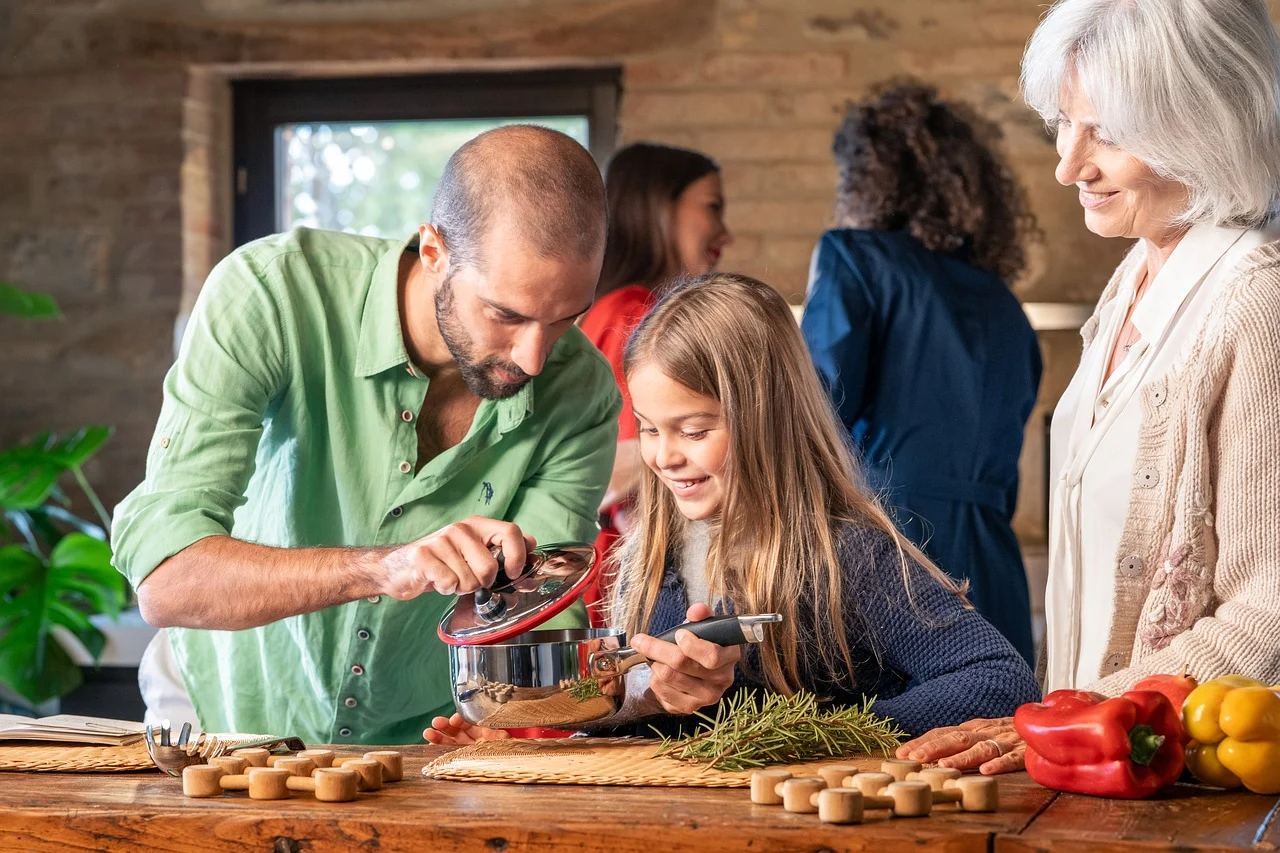
    Cooking healthy foods together can encourage kids to eat healthy, and help them learn what a healthy meal is.

    Small steps can make a big difference. Here are some examples.

    • Shift portions to increase vegetable intake. If kids aren’t eating their vegetables, consider serving smaller amounts of other foods so they’re not full before they get to their vegetables. You can also serve smaller portions of vegetables to avoid overwhelming kids.
    • Make physical activity routine. Enjoy nature walks. Walk to the library or post office. Take a walk while your kids bike or scooter along. 
    • Establish a bedtime routine. You may already do this. If not, make a consistent set of activities you do with your kids before bedtime. Brushing teeth, taking a bath, and reading a story are common ones. You might sing a song or tell a few nursery rhymes together. Make sure to have your own grown-up version of a bedtime routine. It might include brushing teeth, spending time with your significant other (if you have one), packing tomorrow’s lunches, and making a to-do list for the next day.

    What may be the biggest difference for me and my son between the holiday season and routine days of winter is sugar consumption. Christmas candy, irresistible chocolate coins, and birthday cakes contribute added sugars. Furthermore, my son gets a lot of juice and apple cider when my parents are home. They don’t have added sugars, but they do have a lot of sugar. Now we’re back to one reasonable portion of one sugar-sweetened treat a day at home.

    Look for Information, Listen, and Adjust

    If your routine isn’t working, troubleshoot to figure out why not. If kids are cranky or resistant, there’s probably a reason. It’s possible they’re just being difficult, but it’s also possible there’s an underlying barrier, such as fatigue or anxiety. Either way, simple changes can often make a difference.

    Have you tried brushing your teeth together, or singing tooth brushing songs?

    Here are some common reasons why a routine isn’t working, and possible fixes. 

    What Might Be Going OnWhat Can Help
    Kids are tiredAn earlier bedtime can help kids get more total sleep. A consistent bedtime—even on weekends—can prevent starting the school week already short on sleep.
    Kids are overstimulatedAllow 20–30 minutes after school for kids to decompress by amusing themselves however they want (within household rules). Let them know you’re available when they’re ready. Check their schedule to be sure they have at least 30–60 minutes of true downtime each day—unstructured time not dedicated to homework or extracurricular activities.
    Kids want to exert controlOffer choices: “Homework before or after snack?” “Do you want a 5-minute warning or a song timer?” “Do you want to start with reading or math?” Shift from time-based rules to task-based routines. Instead of “It’s 6:30, do your homework,” try “After homework, it’s free time.”

    Turn the dark days of winter into a bright spot with small changes in how you approach your kids and manage schedules. Plus, you can incorporate healthy choices in your family’s daily routine to take advantage of the predictable days that often come in mid-winter.

  • A Healthy Transition Back to School After Break: Parent-Tested Tips

    A Healthy Transition Back to School After Break: Parent-Tested Tips

    Going back to school can be tough for families after a break. Winter break, for example, can be 2-3 weeks for many school children, and include holidays and other seasonal events. When kids are out of school, there’s less reason to follow a consistent routine, especially if parents are taking time off work. Sleep, eating, and activity patterns can be different or non-existent during break. 

    The return to school can feel scary if you’re worried about transitioning back to strict schedules, early mornings, and homework – but don’t worry. These tips can help you reset and ease the transition back to school and regular schedules. 

    Routines While Out of School: Looser But a Necessary Break

    When there’s no school or work to create a schedule, it’s likely that you’ll ease out of your regular routine. Sleep times may shift, and meal times may be less regimented. Instead of sitting down to balanced meals, many families shift to more takeout, snacking, and holiday treats. 

    On vacation, it’s good to take advantage of flexible schedules!

    There’s nothing wrong with this for the short-term. For many busy parents, it’s necessary to take a break from what feels like planning every aspect of life, the way you might when there are work, homework, and extracurricular activities to keep straight. Some mental down time can let you recharge for the rest of the year. 

    But that can lead to a rude awakening when real life kicks back in!

    A regular school day usually starts with a strict waking time followed by a busy morning. It may include packing lunches and homework, eating or packing breakfast, and some rushed discussions about afterschool pickup and activities. Later, there may be sports or other activities, dinner, and homework. A regular bedtime is essential for good health, since you’ll all be repeating the schedule tomorrow. 

    Getting Back into a Schedule – Including Sleep

    Planning your schedule ahead of time lets you fit the important things into each day without as much effort. When you’re consistent, your mind and body are more prepared. You have energy when it’s time to wake up, you’re tired when it’s time to sleep, and you’re hungry at meal times. 

    Thankfully, when school starts back up, there are a lot of set times that you can work around as you’re getting back on schedule! 

    • The start of the school day
    • The end of the school day
    • Any extracurricular activities
    • Any meetings you have, or a time you come home from work (or stop working)

    Use these events to your advantage as you reset your schedule. 

    School starts early in the morning, so you’ll need to get up on time. It can be challenging if your family has shifted to a later schedule over the holidays, but gradually shifting back can help. Wake up and go to sleep a few minutes earlier each day until your body’s clock is back to being on “school” time. 

    It helps to re-establish regular meal times and physical activity schedules, too. Try to get back to your typical family eating patterns and times so that your body and mind can go back to predicting when meal times and sleep times will be. 

    Make a To-Do List to Relieve Stress on Parents

    There’s a lot to do when school gets back in session, but you can use simple tools to make it easier on kids and parents. A simple to-do list or checklist can relieve the burden of trying to remember things. It can help you make sure everyone has what they need when leaving home in the mornings. It can also make your evening calmer. 

    Here’s what you might include on a daily checklist or to-do list. 

    • Pack backpacks, which might include lunches, water bottles, and homework.
    • Check for gym clothes (older kids), instruments, sports equipment, or other items needed for extracurricular activities that day or the next day. 
    • If you work outside the home, pack your own lunch and any laptops or other work items you’ll need. 
    • Activities like grocery shopping (make a list!), filling the car with gasoline, and walking to the library to return a book. 
    • Chores like meal prep, housecleaning, laundry, and gardening. 
    • Working out or walking. 
    Make sure everything’s packed the night before so you can be on time for the school bus!

    The less you need to remember, the less likely you are to forget. That’s especially true when last-minute, unexpected demands arise, like your kids needing to finish a project by the next morning. It’s also more efficient to go down a checklist than to try to remember what you need to do. 

    Back to Healthy Habits

    It’s okay if your family slacked on your typical healthy habits. Meals may have been more like sporadic snacks. Screen time may have crept up. You may have missed a workout or three. It’s good to take a break occasionally! But when vacation is over, it’s time to get back to healthy habits for everyone. 

    Here’s a snapshot. 

    • A balanced breakfast, especially for kids. It’s hard to focus on learning when they’re hungry! Consider fresh fruit, reduced-fat dairy like yogurt or milk, a whole grain like oatmeal, whole-grain toast, or whole-grain cereal. Here are ideas
    • A healthy lunch with fiber and protein. Check our healthy lunch ideas
    • A family dinner with protein, whole grains, and vegetables. Don’t worry – here are plenty of options for nutritious, family-friendly, simple dinners
    • Physical activity. Kids can get back to active recess and sports at school with friends, or afterschool in organized activities. Parents can get back to regularly scheduled workouts. 
    Taco night is a kid-friendly, parent-friendly, nutritious option.

    If screen time crept up, it’s a good time to dial it back. Kids can keep themselves busy with homework, afterschool activities, and reading at home. If you do let them use devices, set strict rules on what they’re allowed to do or watch, and for how long. Then stick to the boundaries you set!

    Ongoing Support for Kids When Returning to School

    Keep in mind that while as a parent, you may find school to be a blessing, kids may not feel like going back. Even kids who love school and do well in it may find it stressful or boring. Or, they may just prefer to be at home with you – not realizing that “vacationing you” has time to play with them, while “working” you may not. 

    Do your best to “be there” for your kids. Talk them through any fears or anxieties they have. Validate their feelings, but reassure them. If it helps, talk about the things they’re looking forward to in school, whether it’s a daily occurrence like playing kickball at recess, or something coming up like a field trip or class party. You might also find it helpful to talk about your plans for next weekend or an upcoming holiday so that kids have something to focus on besides school. 

    Remind kids about fun things at school, like games with friends.

    The transition is an ongoing process, so be prepared to work through it for days or weeks. If you see any concerning signs, talk to your children’s teacher or pediatrician for advice. 

  • First Day of Third Grade: Back-to-School Prep and Observations

    School started last week! I know I’m not the only parent who was ready for it. Here’s how the countdown to the first day of third grade went. My son is 8 years old. 

    Back-to-School Shopping List: Short and Sweet!

    Back-to-school shopping appears to be a season these days. Sales seem to start in June and continue through summer vacation. 

    My son’s school supplies pencils, crayons, highlighters, scissors, and other items that they need in the classroom. There’s a beautiful pencil box waiting on each student’s desk when they enter the classroom. I’m just responsible for supplying a backpack, lunchbag, and water bottle. He ended up with this backpack, which feels cushiony and has reinforcements under the side water bottle holders. 

    I’m also lucky when it comes to buying clothes. My son is easy-going, with a few shirts and pants being sufficient. Plus, he enjoys shopping with his grandparents, so I don’t have to do much for his wardrobe. 

    Though I get off relatively easy, it’s true that there’s no such thing as a free lunch. I do pay the price for having very little to buy! 

    Cost of a “Free Education:” Fundraising for a Good Cause

    Fundraising starts before school starts with the Annual Giving Campaign. The suggested donation is $1,000 per family. I’m happy to pay it. A public education is supposed to be free, but I can see where the money is spent. The school offers extracurriculars like art, music, gardening, computer lab, and science lab. The facilities are very nice, and, of course, there are the school supplies. You can see that families’ donations are going to benefit the children.

    A Relief for Parents

    Summer vacation can be tough for parents. I can only speak with certainty for myself, but I think other parents feel similarly. Working parents like me enjoy unbelievable freedom and flexibility compared to parents who work in the office, but there are challenges, too. 

    In my case, being at home doesn’t always mean my son is disruptive, but he is increasingly savvy as he grows up. Now he knows that he can watch a screen if I need to work and can’t entertain him. So, I try to avoid the situation. Instead, I try to work at home when he’s not home, or take him somewhere without a screen if I need to work. The library, a park, and long bus rides are options that currently amuse him while I can work. 

    School is a safe, dependable place to leave my son without guilt. I can feel good that he’s with his friends, his brain is getting some sort of stimulation (hopefully), and I’m not choosing between one of three not-great options:

    • Asking my parents to exhaust themselves while watching my son
    • Paying for a babysitter
    • Begging my son to be quiet while I’m working

    School is even low-cost, though as you can see from the cost of a free public education above, it’s not quite free. 

    I assume stay-at-home parents also feel relieved when their children return to school, but I can’t speak for them. Many of them may feel lonely during the day.  Others may embrace the chance to socialize, clean their homes, binge watch tv shows, or volunteer at their children’s schools. 

    A Simple First-Day-of-School Ritual…and What I Did After Drop-off

    I had long planned for the first day of school. I’d walk my son to school at his request. It’s a first-day-of-school tradition, since I don’t usually take him to school. (Usually my parents or a babysitter do the honors while I run). 

    My plan was to drop him off, then go to the park to play basketball. (I’m still playing mostly left-handed, though my back is healing nicely). Then I was going to do some work, take a nap, and clean our home. I played basketball and did some work. Somehow, I wasn’t tired. Maybe I had adrenaline from the excitement of being on my own, guilt-free. 

    First Day of Third Grade: A Statement of Independence 

    I don’t typically take my son to school. When I decided to have a child, I promised myself that I wasn’t going to give up my mornings. I like to run, work out, and have my own time. So, I get a babysitter or my parents take my son in the mornings.

    My son wanted me to take him on the first day of school. I got up early, ran, and then we walked to school. I even remembered to take a first-day-of-school photo. 

    The other children were entering the schoolyard with one or two parents. My son sweetly said goodbye and kindly refused my offer to stand in the yard with him like every other parent. So, that was that. 

    I think third grade comes with a little more independent work. That’s great practice!

    “Best Day Ever”

    It’s nice that even though he’s a big 8-year-old, my son still has a lot of adorable qualities. For example, he still regularly has the best day ever. His first day of school was, according to him, the best day ever. Here’s what I gathered about why.

    • He got a pencil from his teacher. 
    • A classmate paid him a compliment (as part of what apparently was an icebreaker to pass along a compliment to another student). 
    • His teacher awarded the class 10 extra minutes of Friday Free Time.

    He also enjoyed being in the big building, which is where the third, fourth, and fifth-grade classrooms are. 

    The Afterschool Meltdowns Continue

    After the best day ever, who wouldn’t have a meltdown? They’re regular; nearly every day of school ends with a shorter or longer meltdown. This one was shorter than some. 

    How did the first day of school go for you and your children? How did they react to it after school?